Hong Kong International Convention for the Safe and Environmentally Sound Recycling of Ships (HKC)
The Hong Kong International Convention for the Safe and Environmentally Sound Recycling of Ships (HKC) is a global treaty adopted under the auspices of the International Maritime Organization (IMO) to ensure that ships, when recycled after reaching the end of their operational life, do not pose unnecessary risks to human health, safety or the environment.
The Convention establishes a binding international framework governing ship recycling by regulating both:
- Ships, throughout their lifecycle, and
- Ship recycling facilities, where dismantling operations are carried out.
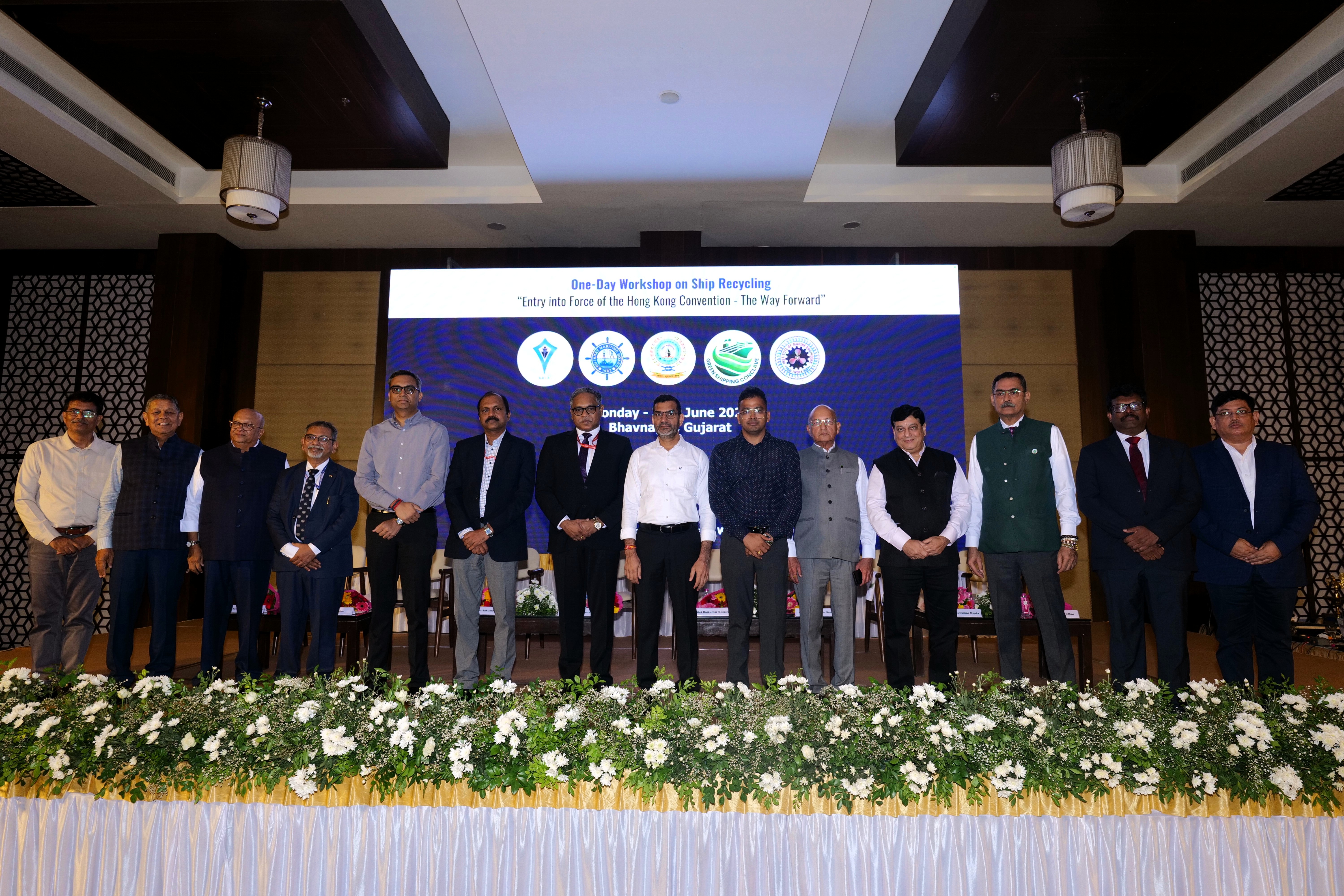
Entry into Force of Hong Kong Convention Workshop at Bhavnagar
Background and Development
The Convention was adopted at a Diplomatic Conference held in Hong Kong, China, in May 2009, following extensive deliberations among IMO Member States. Its development involved close cooperation with the International Labour Organization (ILO) and the Parties to the Basel Convention on the Control of Transboundary Movements of Hazardous Wastes and their Disposal, recognising the cross-cutting environmental, occupational safety and waste-management dimensions of ship recycling.
The need for the Convention arose from growing international concern that end-of-life ships may contain hazardous materials such as asbestos, heavy metals, hydrocarbons and ozone-depleting substances, and that recycling activities in several regions lacked adequate controls to safeguard workers and the environment.
Objectives of the Convention
The Hong Kong Convention seeks to:
- Ensure that ship recycling is conducted without unnecessary risks to workers and human health
- Prevent, reduce and minimise environmental pollution arising from recycling activities
- Establish uniform global standards applicable to ships and ship recycling facilities
- Improve working and environmental conditions at ship recycling facilities worldwide
- Strengthen enforcement, transparency and international cooperation in ship recycling
Scope and Regulatory Coverage
The Convention adopts a comprehensive lifecycle approach and regulates ship recycling through three interconnected pillars:
- ShipsRegulations cover the design, construction, operation and preparation of ships, so as to facilitate safe and environmentally sound recycling at the end of their life, without compromising safety or operational efficiency during service.
- Ship Recycling FacilitiesRegulations govern the authorisation, operation and monitoring of ship recycling facilities, requiring safe working practices, environmentally sound waste management and emergency preparedness.
- Enforcement and ComplianceThe Convention establishes mechanisms for survey, certification, inspection, reporting and enforcement, applicable to both ships and recycling facilities.
Inventory of Hazardous Materials (IHM)
A central requirement under the Hong Kong Convention is the Inventory of Hazardous Materials (IHM). All applicable ships are required to:
- Carry a ship-specific Inventory of Hazardous Materials
- Identify hazardous materials present on board
- Indicate the location and approximate quantities of such materials
An appendix to the Convention lists hazardous materials whose installation or use is prohibited or restricted in ships, shipyards and ship repair yards of Parties to the Convention.
The IHM enables ship recycling facilities to plan dismantling operations in a safe, controlled and environmentally sound manner.
Surveys and Certification of Ships
To ensure compliance, the Convention prescribes a structured regime of surveys and certification, including:
- Initial survey to verify the Inventory of Hazardous Materials
- Renewal surveys during the operational life of the ship
- Final survey prior to recycling, confirming readiness for safe recycling
Based on these surveys, ships are issued internationally recognised certificates in accordance with the provisions of the Convention.
Ship Recycling Plan (SRP)
Before recycling commences, a Ship Recycling Plan (SRP) must be prepared by the ship recycling facility for each individual ship.
The Ship Recycling Plan:
- Is ship-specific and based on the ship’s particulars and verified IHM
- Defines the dismantling sequence and recycling methodology
- Specifies safety procedures, hazardous material handling and waste management arrangements
The SRP must be approved by the competent authority prior to the start of recycling operations.
Obligations of Ship Recycling Facilities
Parties to the Convention are required to take effective measures to ensure that ship recycling facilities under their jurisdiction comply with the requirements of the Hong Kong Convention.
- Authorisation of ship recycling facilities by the competent authority
- Ongoing inspection, monitoring and enforcement
- Worker safety, training and health protection requirements
- Environmentally sound management and disposal of hazardous materials
Supporting IMO Guidelines under the Hong Kong Convention
To support uniform and effective implementation of the Convention, the International Maritime Organization (IMO) has adopted a comprehensive set of mandatory and recommendatory guidelines, including:
- 2011 Guidelines for the Development of the Inventory of Hazardous Materials (Resolution MEPC.197(62), as amended)
- 2011 Guidelines for the Development of the Ship Recycling Plan (Resolution MEPC.196(62))
- 2012 Guidelines for Safe and Environmentally Sound Ship Recycling (Resolution MEPC.210(63))
- 2012 Guidelines for the Authorization of Ship Recycling Facilities (Resolution MEPC.211(63))
- 2012 Guidelines for the Survey and Certification of Ships under the Hong Kong Convention (Resolution MEPC.222(64))
- 2012 Guidelines for the Inspection of Ships under the Hong Kong Convention (Resolution MEPC.223(64))
These guidelines provide detailed technical and procedural clarity to Administrations, shipowners, recognised organisations and ship recycling facilities, ensuring consistent application of the Convention.
Entry into Force and Global Significance
The Hong Kong Convention entered into force on 26 June 2025, marking the transition from voluntary guidance to a binding global regulatory regime for ship recycling.
Its entry into force:
- A
- Strengthens protection of workers and the environment
- Creates a level playing field among ship recycling nations
- Enhances confidence among shipowners, flag States and financial institutions
- Reinforces the role of compliant recycling States in global maritime sustainability
Hong Kong International Convention for the Safe and Environmentally Sound Recycling of Ships
| No. of Year | Title | Issue Date | Download/View |
|---|---|---|---|
| 2026 | 2023 guidelines for the development of the inventory of hazardous materials | 10-Feb-2026 | View (4.21 MB) PDF |
| 2026 | 2012 guidelines for the survey and certification of ships under the hong kong convention | 10-Feb-2026 | View (147.65 KB) PDF |
| 2009 | Hong kong international convention for the safe and environmentally sound recycling of ships, 2009 | 06-Feb-2026 | View (1.79 MB) PDF |
| 2026 | 2012 guidelines for safe and environmentally sound ship recycling | 21-Oct-2025 | View (842.66 KB) PDF |
| 2026 | 2012 guidelines for the authorization of ship recycling facilities | 21-Oct-2025 | View (85.77 KB) PDF |
| 2026 | 2011 guidelines for the development of the ship recycling plan | 21-Oct-2025 | View (88.13 KB) PDF |