Ship Recycling in India
Ship recycling is an integral part of the maritime lifecycle, enabling ships that have reached the end of their operational life to be dismantled in a safe, environmentally sound and resource-efficient manner. When undertaken under a robust regulatory framework, ship recycling supports circular economy objectives by recovering steel and reusable materials while safeguarding the environment and ensuring the health and safety of workers.
India has emerged as a global leader in responsible ship recycling. Over the past decade, the sector has transitioned from conventional dismantling practices to a regulated, internationally aligned industry governed by comprehensive legislation, institutional oversight and continuous monitoring. Today, India is recognised as one of the most credible and compliant ship recycling destinations worldwide.
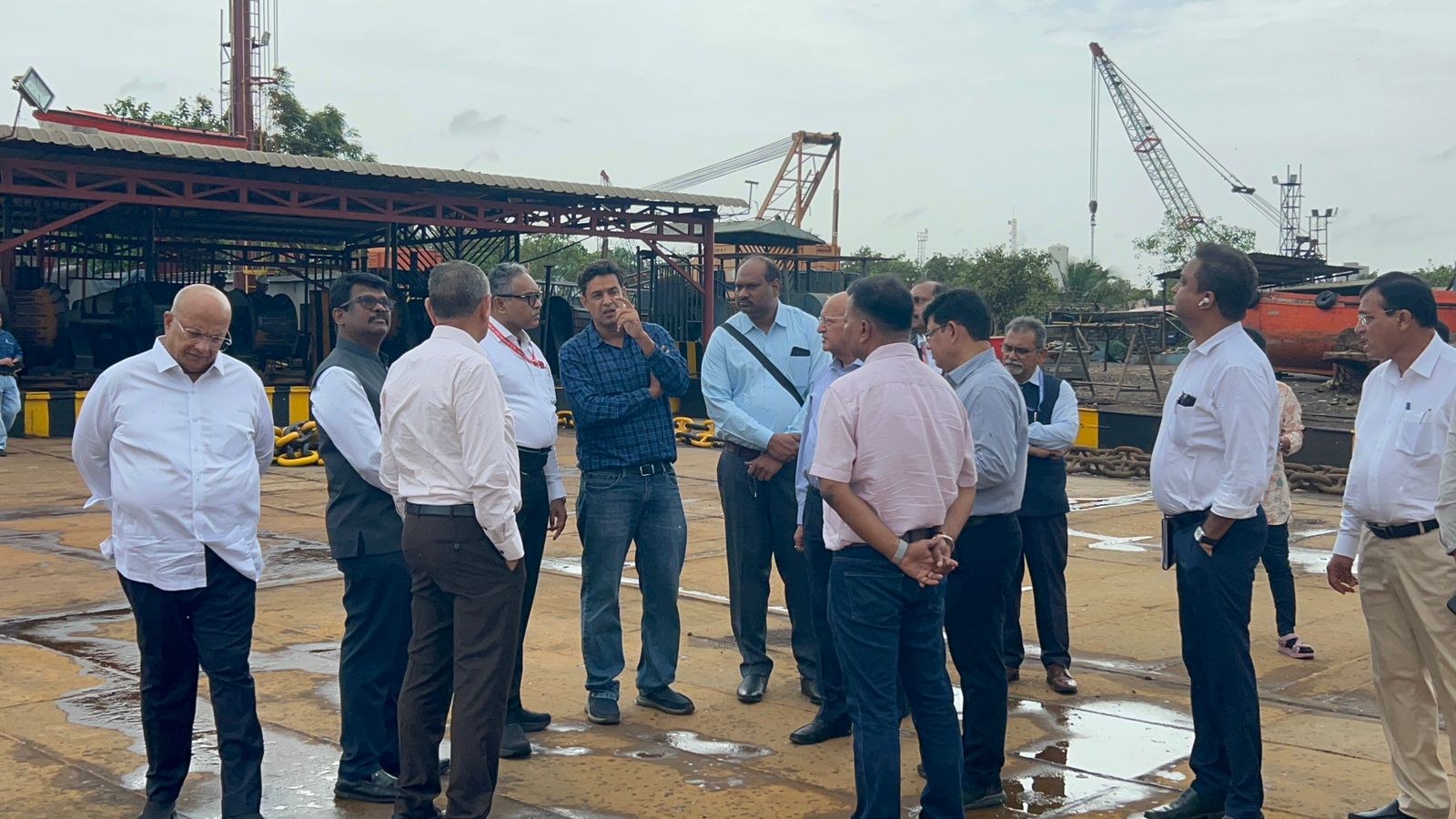
Ship Recycling Yard Visit by DG(S) at Alang
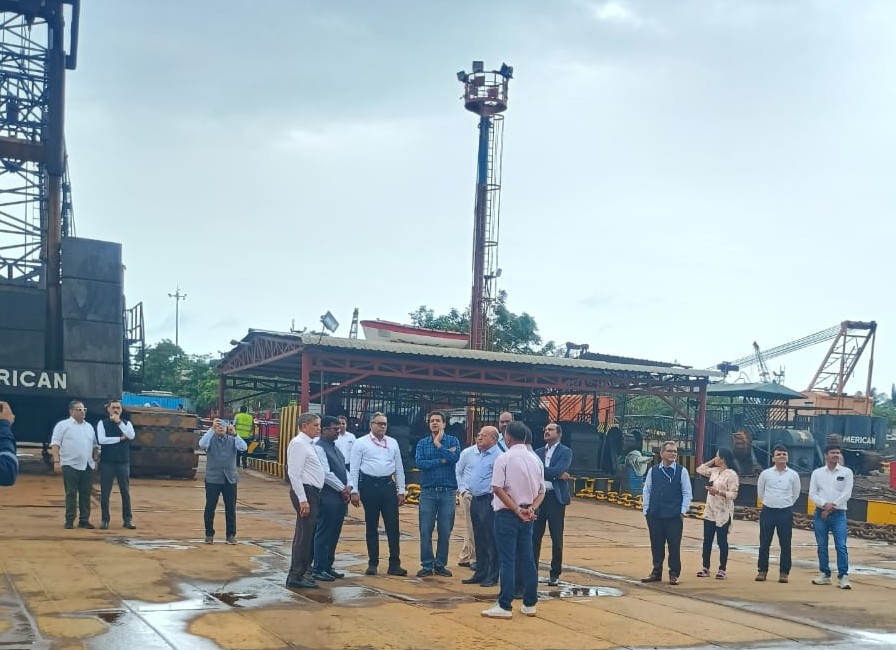
Ship Recycling Yard Visit by DG(S) at Alang
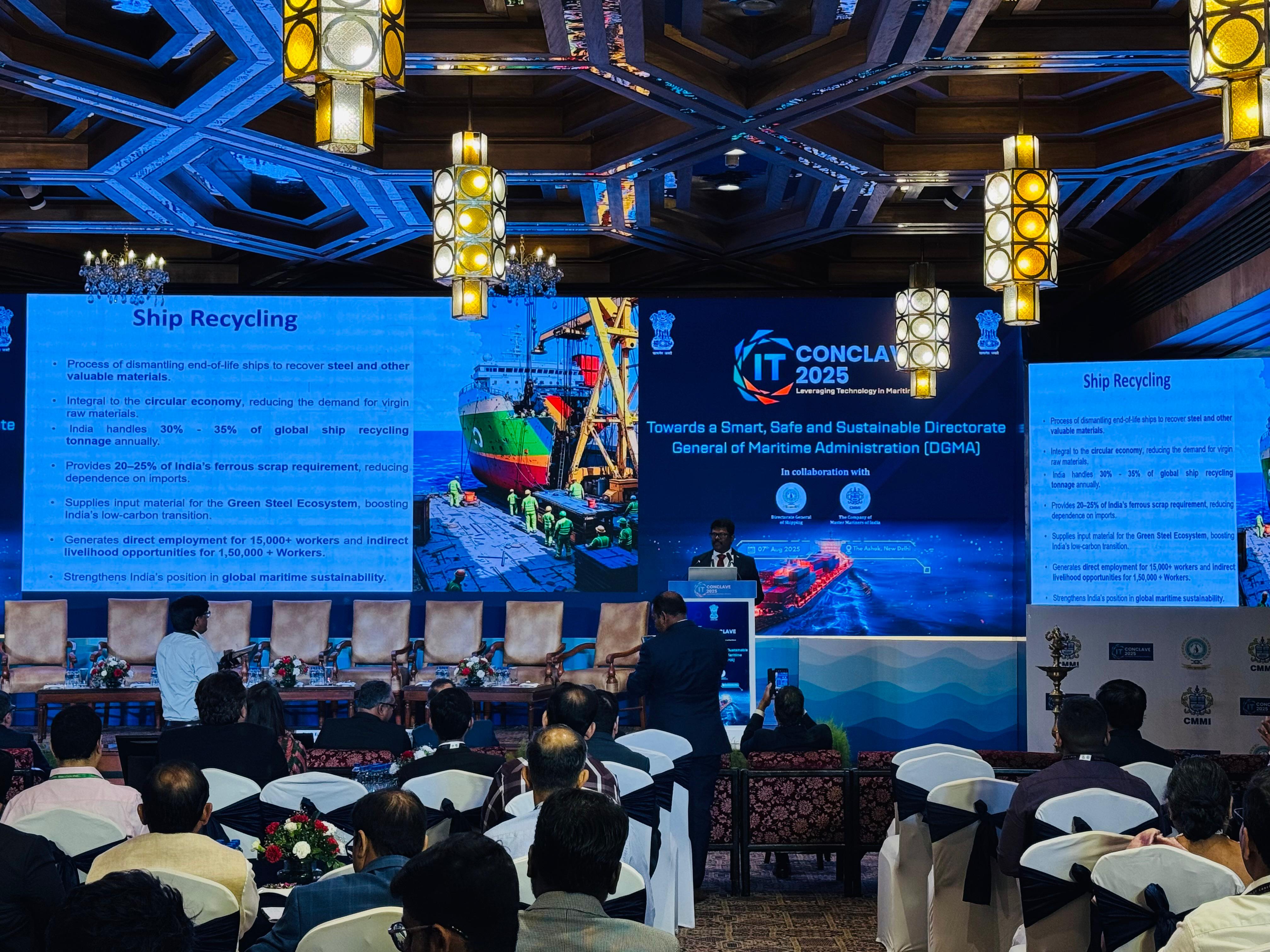
Presentation Address on Ship Recycling and Ship Recycling Portal in DGS IT Conclave, New Delhi
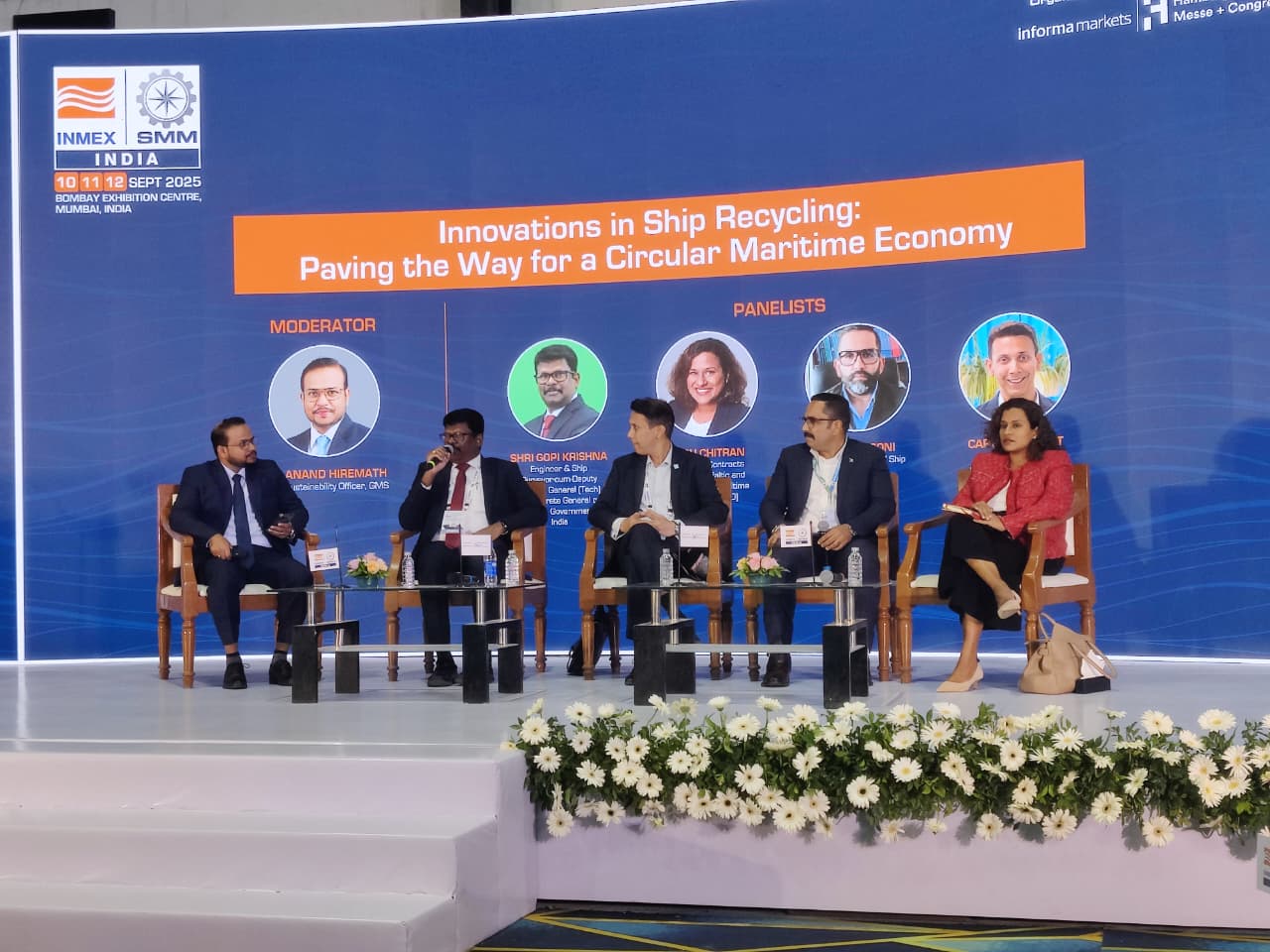
Panel discussion on Innovations in Ship Recycling : Paving the way for a circular Maritime Economy at INMEX SMM, Mumbai
Importance of Ship Recycling in the Indian Context
Ship recycling holds strategic importance for India across environmental, economic and industrial dimensions.
From a resource perspective, ship recycling contributes significantly to domestic availability of ferrous scrap, reducing dependence on imported raw materials and strengthening supply security for steel and allied industries. Recycled steel requires substantially lower energy compared to primary steel production and results in reduced greenhouse gas emissions, directly supporting India’s sustainability and decarbonisation objectives.
Economically, the sector generates large-scale employment and sustains a wide ecosystem of ancillary industries including transport, re-rolling mills, equipment suppliers and waste management services. Ship recycling also complements national initiatives such as Make in India and Atmanirbhar Bharat by linking end-of-life ship management with domestic manufacturing and industrial growth.
Environmentally, regulated ship recycling prevents unsafe disposal of end-of-life ships, mitigates marine and coastal pollution risks and ensures responsible handling of hazardous materials under strict regulatory supervision.
Ship Recycling Landscape and Yard Status in India
India is among the leading ship recycling nations globally. The Alang-Sosiya ship recycling cluster in Gujarat forms the backbone of the country’s recycling capacity and is the largest ship recycling hub in the world. The cluster accounts for approximately 97% of India’s ship recycling activity, making it the central pillar of the national ship recycling ecosystem.
The Alang-Sosiya cluster has an annual recycling capacity of around 6 million gross tonnes, supported by a large concentration of authorised ship recycling yards, downstream steel re-rolling mills and waste management infrastructure. Over the years, the cluster has undergone extensive modernisation and now represents India’s primary interface with the global ship recycling market.
In addition to Alang-Sosiya, India also has:
- One ship recycling yard at Amar Iron Udyog, Kolkata, and
- One recycling yard at Steel Industrials Kerala Limited (SILK), Kerala, which undertakes ship recycling on a limited scale
While these facilities contribute to regional capacity, Alang - Sosiya remains the dominant recycling centre, both in terms of volume and compliance depth.
Indian ship recycling yards have undergone significant upgradation and now operate with:
- Engineered and demarcated recycling plots
- Impermeable working surfaces and drainage systems
- Mechanised material handling and lifting equipment
- Segregated hazardous waste storage areas
- Authorised downstream waste treatment and disposal linkages
- Structured safety, health and emergency response arrangements
A substantial number of Indian yards are compliant with international requirements under the Hong Kong International Convention, positioning India as a globally preferred destination for responsible ship recycling.
| Yard | Total Number of Plots | Operational Plots | HKC Compliant Yards |
|---|---|---|---|
| Alang, Bhavnagar (Gujarat) | 150 | 128 | 115 |
| Steel Industries Limited (Kerala) | 1 | 1 | 0 |
| Amar Iron Udyog, Kolkata (West Bengal) | 1 | 1 | 0 |
Regulatory Framework Governing Ship Recycling in India
India has established a comprehensive statutory and regulatory framework to govern ship recycling activities, aligned with international conventions and global best practices. The framework regulates the entire lifecycle of ship recycling, from ship preparation and certification to yard authorisation, operations and compliance monitoring.
Key Legal Instruments
Ship Recycling Act, 2019: Provides the overarching legal foundation for regulating ship recycling in India. It gives domestic effect to international standards, designates the Directorate General of Shipping as the National Authority and mandates authorisation, certification, inspection and enforcement mechanisms.
Ship Recycling Rules, 2021: Operationalise the Act by prescribing procedural and technical requirements including facility authorisation, Ship Recycling Plans, hazardous material management, worker safety, training and reporting obligations.
Ship Recycling Regulations, 2026: Strengthen implementation through detailed operational, safety and environmental standards, ensuring uniform compliance and effective monitoring.
Together, the Act, Rules and Regulations create a structured, enforceable and internationally aligned regulatory framework for ship recycling in India.
Hong Kong International Convention (HKC)
The Hong Kong International Convention for the Safe and Environmentally Sound Recycling of Ships is the principal international instrument governing ship recycling. It establishes legally binding requirements for ships and recycling facilities.
The Convention entered into force on 26 June 2025, making compliance mandatory for Parties. India has aligned its domestic framework through the Ship Recycling Act, Rules and Regulations, with Indian yards adopting HKC standards well in advance.
Under the HKC regime, India undertakes responsibilities as both a flag State and a ship recycling State, including:
- Lifecycle certification of ships
- Authorisation and oversight of ship recycling facilities
- Monitoring of hazardous material management
- Record-keeping and international reporting
Inventory of Hazardous Materials and Lifecycle Compliance
The Inventory of Hazardous Materials (IHM) is a cornerstone of safe ship recycling. It identifies and documents hazardous substances on board ships throughout their lifecycle and prior to recycling.
India follows a lifecycle-based compliance approach, ensuring transparency, traceability and effective risk mitigation before ships enter authorised recycling facilities.
ISO Standards and Quality Systems
Indian ship recycling yards have embedded internationally recognised ISO standards into their management and operational systems, strengthening consistency and global confidence.
- ISO 9001 – Quality Management Systems
- ISO 14001 – Environmental Management Systems
- ISO 45001 – Occupational Health and Safety Management Systems
- ISO 30000 – Ship Recycling Management Systems
Digital Systems and Governance Initiatives
India is developing dedicated digital systems to strengthen governance, monitoring and transparency in ship recycling, covering authorisation, certification, inspections and reporting.
Ship Recycling Credit Note
Introduced under the Ship Building Financial Assistance Scheme (SBFA) 2.0, the Ship Recycling Credit Note incentivises shipowners to recycle vessels in compliant Indian yards and build new ships domestically.
A Credit Note equivalent to 40% of the scrap value is issued and redeemable against new ship construction at Indian shipyards.
- Encourages HKC-compliant recycling
- Promotes domestic shipbuilding
- Creates a circular maritime value chain
Green Steel Linkage and Circular Economy
Steel recovered from ship recycling supports India’s Green Steel and circular economy objectives by reducing energy consumption, emissions and reliance on virgin raw materials.
India’s Role in Global Ship Recycling
Through early adoption of international standards and strong regulatory enforcement, India has emerged as a global leader in responsible ship recycling and continues to engage actively in international cooperation.
Way Forward
As global shipping moves towards cleaner fleets, India will deepen HKC compliance, strengthen digital governance, enhance worker welfare and consolidate its position as the world’s most trusted ship recycling destination.
Ship Recycling in India
| No. of Year | Title | Issue Date | Download/View |
|---|---|---|---|
| 2021 | Ship Recycling Rules 2021 | 10-Feb-2026 | View (1.02 MB) PDF |
| 2026 | Ship Recycling Regulations | 06-Feb-2026 | View (2.24 MB) PDF |
| 2009 | Hong kong international convention for the safe and environmentally sound recycling of ships, 2009 | 06-Feb-2026 | View (1.79 MB) PDF |
| 2019 | Ship Recycling Act-2019 | 16-Dec-2019 | View (720.95 KB) PDF |