Advancing India’s Maritime Transition Towards Net Zero
India’s maritime sector is at a critical inflection point as the country progresses toward its long-term climate commitment of Net Zero by 2070. Shipping and port-led logistics remain central to India’s economic growth and trade competitiveness. At the same time, global maritime decarbonisation frameworks, evolving market expectations and climate-linked financial systems require structured national preparedness.
The Maritime INDIA @ Net Zero initiative has been conceived as a high-level, multi-ministerial and multi-stakeholder platform to translate the National Green Shipping Policy (NGSP) into coordinated national action.
Maritime INDIA @ Net Zero
Maritime INDIA @ Net Zero
Maritime INDIA @ Net Zero
Maritime INDIA @ Net Zero
Maritime INDIA @ Net Zero
Maritime INDIA @ Net Zero
Maritime INDIA @ Net Zero
About the Workshop
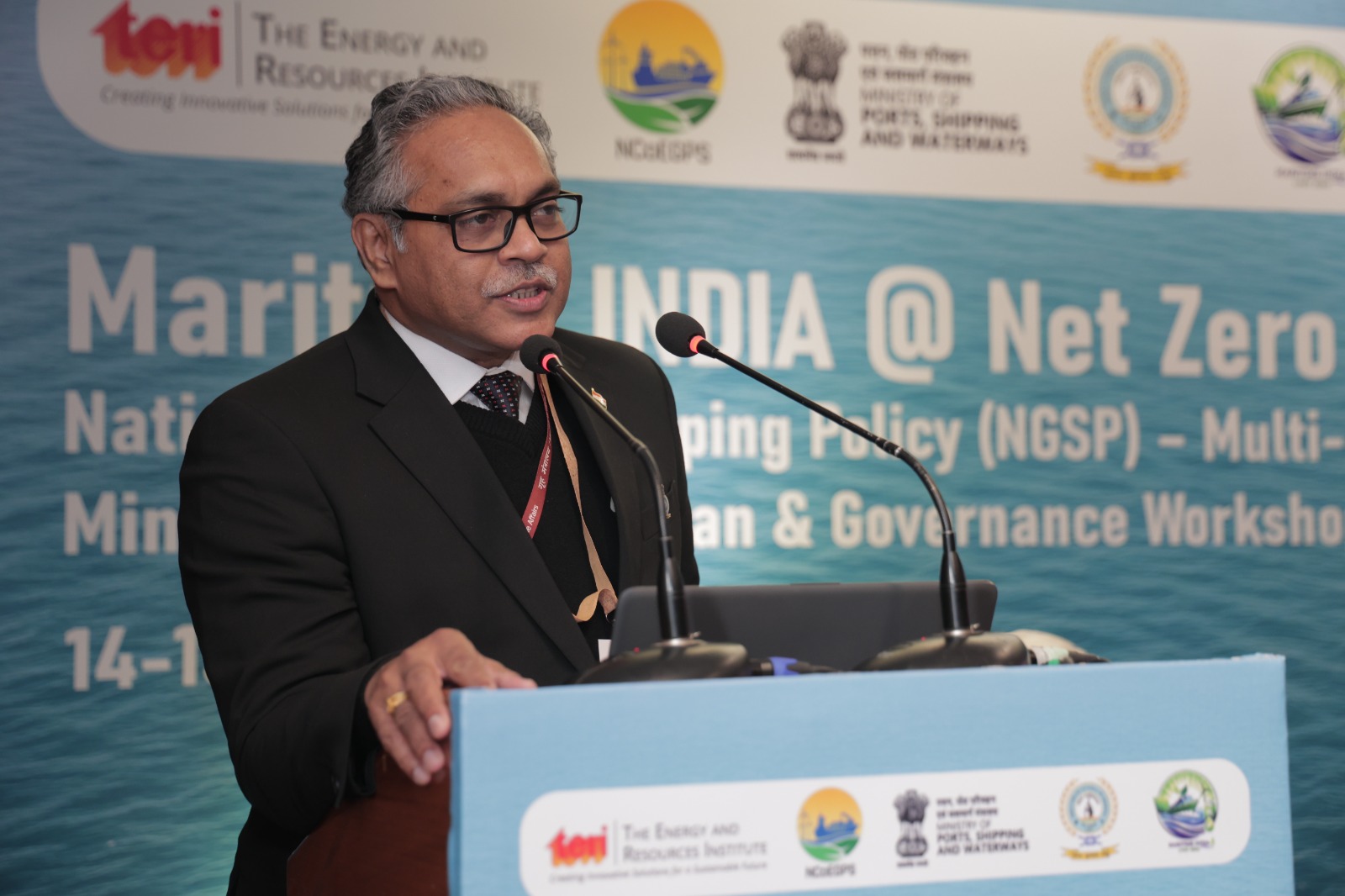
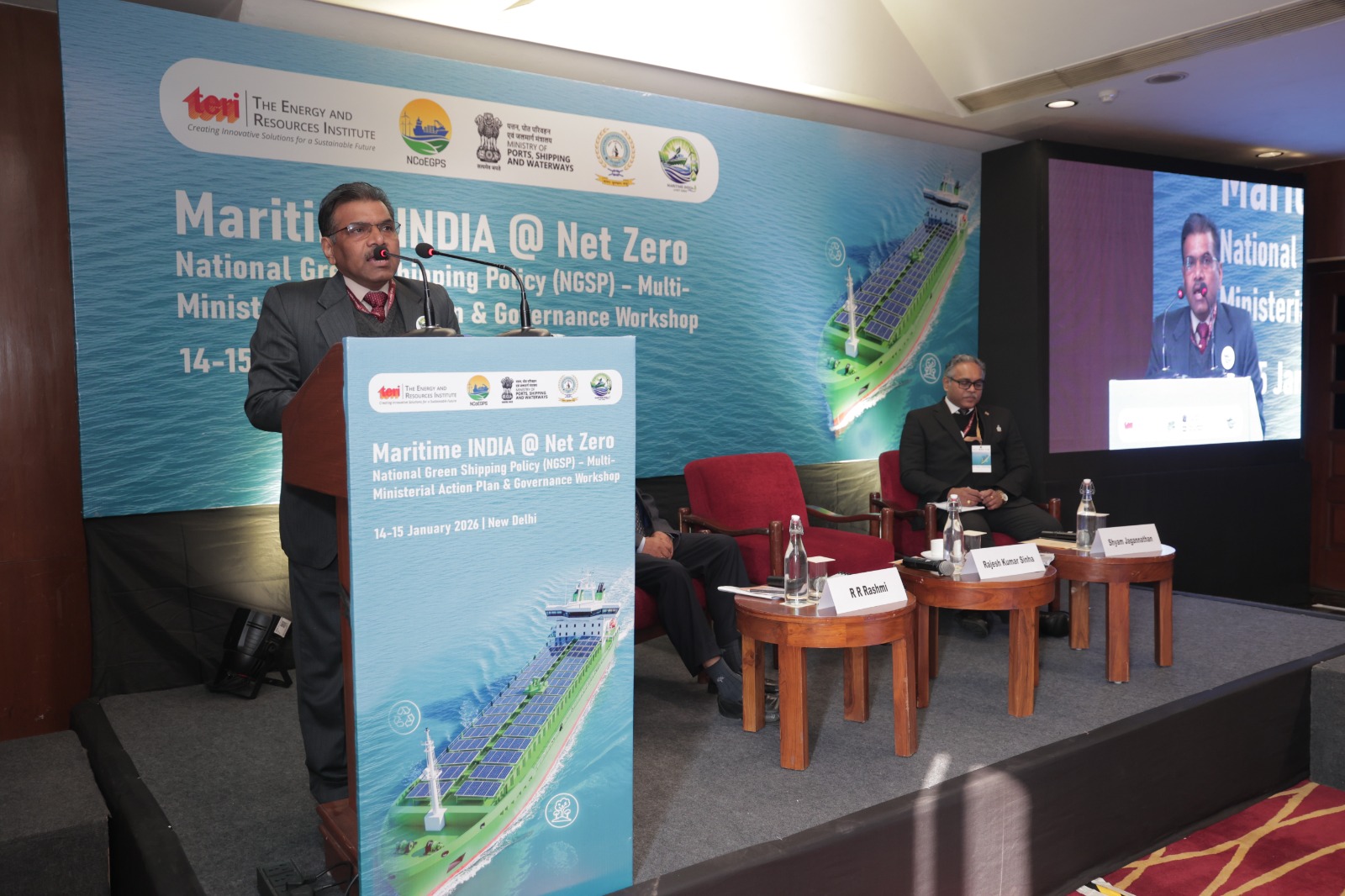
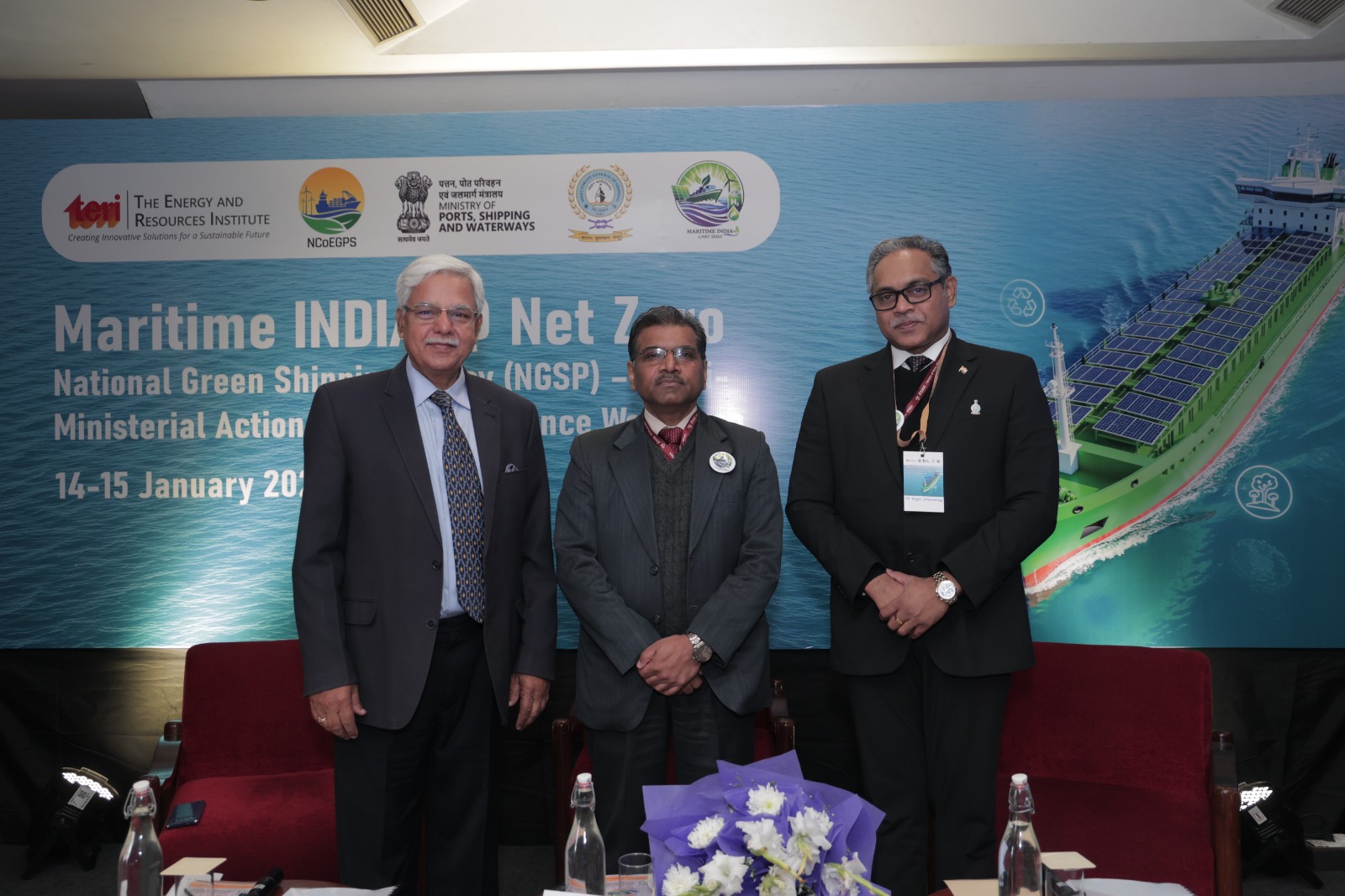
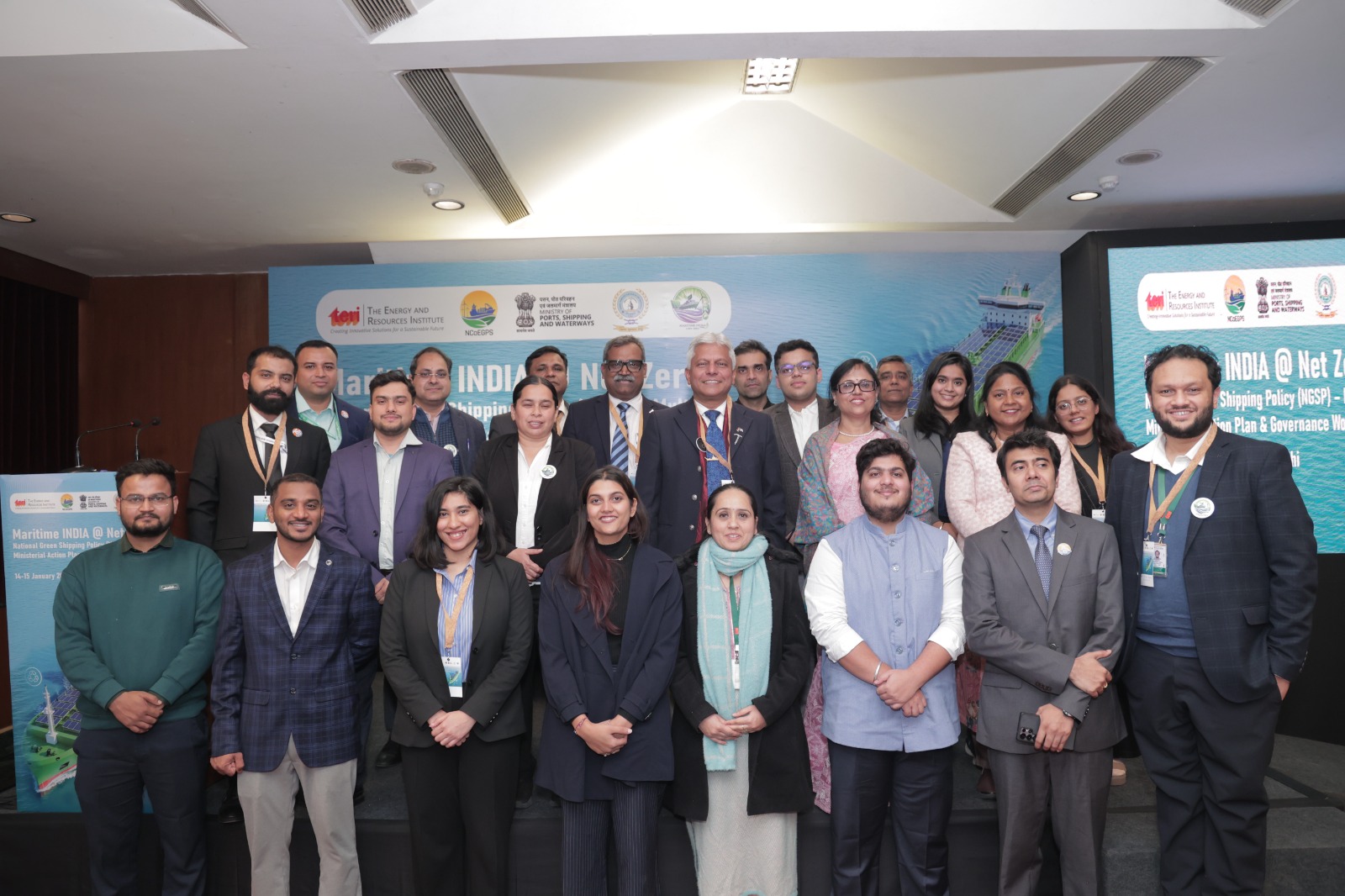
The two-day national workshop titled “Maritime INDIA @ Net Zero” was organised on 14–15 January 2026 at India Habitat Centre, New Delhi (Hybrid Mode) by the Directorate General of Shipping (DGS), Ministry of Ports, Shipping and Waterways (MoPSW), Government of India in collaboration with the National Centre of Excellence for Green Ports and Shipping (NCoEGPS), TERI
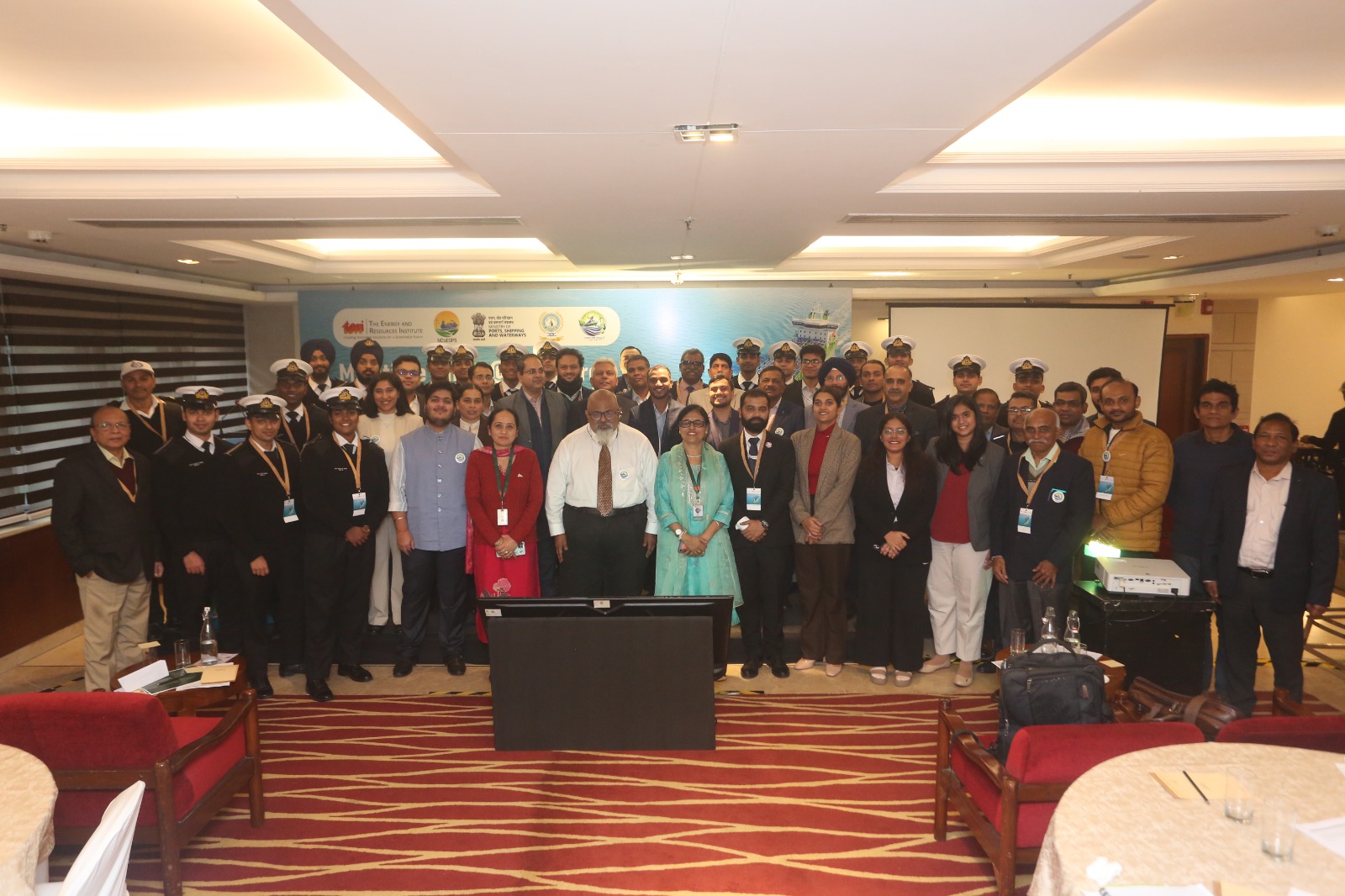
The workshop brought together 312 participants (109 in-person and 203 online) representing government agencies, industry, ports, Mercantile Marine Departments, engine manufacturers, research institutions, financial institutions and academia
It served as a structured platform to move beyond policy articulation toward implementation-oriented action planning, institutional coordination and market enablement under the NGSP.
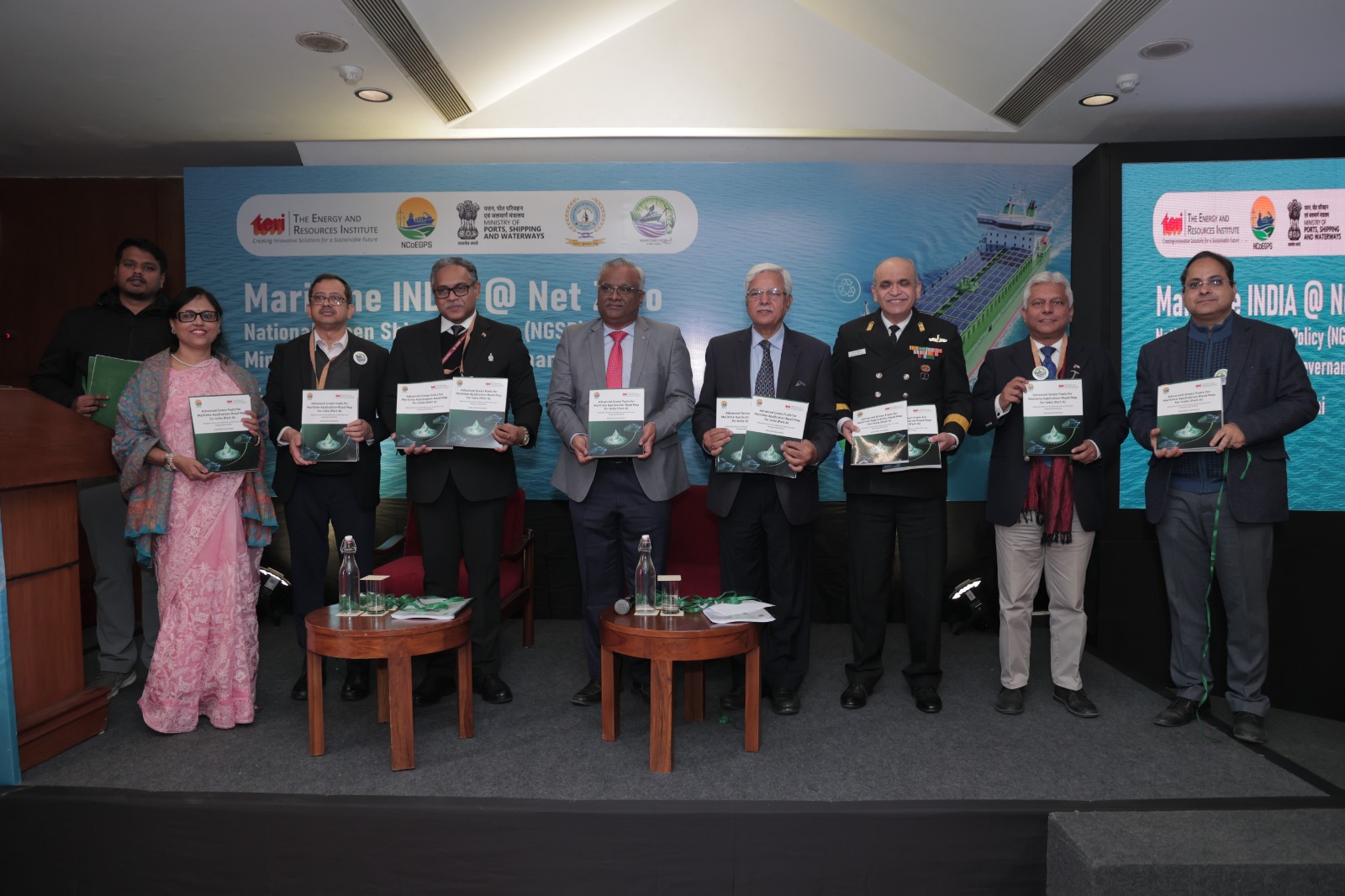
A key milestone during the workshop was the release of the knowledge document:
“Advanced Green Fuels for Maritime Applications – Roadmap for India”
Background & Rationale
The National Green Shipping Policy (NGSP) has been developed as a comprehensive national framework adopting a systems-level approach structured around seven core pillars:
- Green Ships
- Green Fuels
- Green Ship Recycling
- Green Ports
- Green Technology
- Green Finance
- Green Skill and Capacity Building
These pillars collectively address vessel efficiency, alternative fuel transition, sustainable recycling practices, port-led decarbonisation, technology innovation, financing mechanisms and human capital development required to enable India’s maritime decarbonisation journey.
The workshop was designed to align India’s maritime transition with national climate commitments and international maritime obligations, while ensuring regulatory preparedness, investment mobilisation and technology readiness across all seven pillars of the NGSP.
Core Objectives
The Maritime INDIA @ Net Zero platform was structured to:
- Translate NGSP into phased national action plans with short-, medium- and long-term priorities
- Deliberate sector-specific transition pathways across ships, ports, fuels and recycling
- Assess regulatory, safety and institutional readiness for emerging technologies
- Enable green finance, partnerships and market mechanisms
- Strengthen governance, monitoring and inter-ministerial coordination
- Position India within global maritime decarbonisation initiatives
Logo Explanation
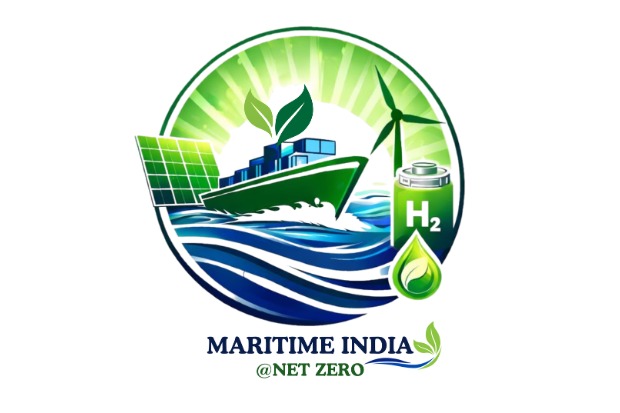
The Maritime INDIA @ Net Zero logo visually represents India’s transition towards a cleaner and more sustainable maritime future through an integrated approach combining green shipping, clean energy and environmental responsibility.
At the centre, the green vessel sailing through ocean waves symbolises the maritime sector’s core role in national growth and global trade while reinforcing the shift towards low-emission and energy-efficient shipping. The blue waves represent the sea, resilience and continuity of maritime operations, while also reflecting the need to protect marine ecosystems through sustainable practices.
The solar panel on the left and the wind turbine on the right signify the adoption of renewable energy as a foundational enabler for decarbonisation across ports and maritime infrastructure. The H₂ battery along with the green drop represents green hydrogen and alternative fuels, highlighting the future fuel pathways needed to achieve net zero maritime emissions. The leaf motifs placed above the ship further reinforce the themes of green transition, sustainability and nature-positive growth, indicating that maritime progress must align with environmental stewardship.
The circular emblem and rising green rays in the background create a sense of momentum and direction, signalling India’s intent to move decisively towards a Net Zero maritime pathway through technology, policy and collaborative implementation.
Thematic Coverage during Workshop
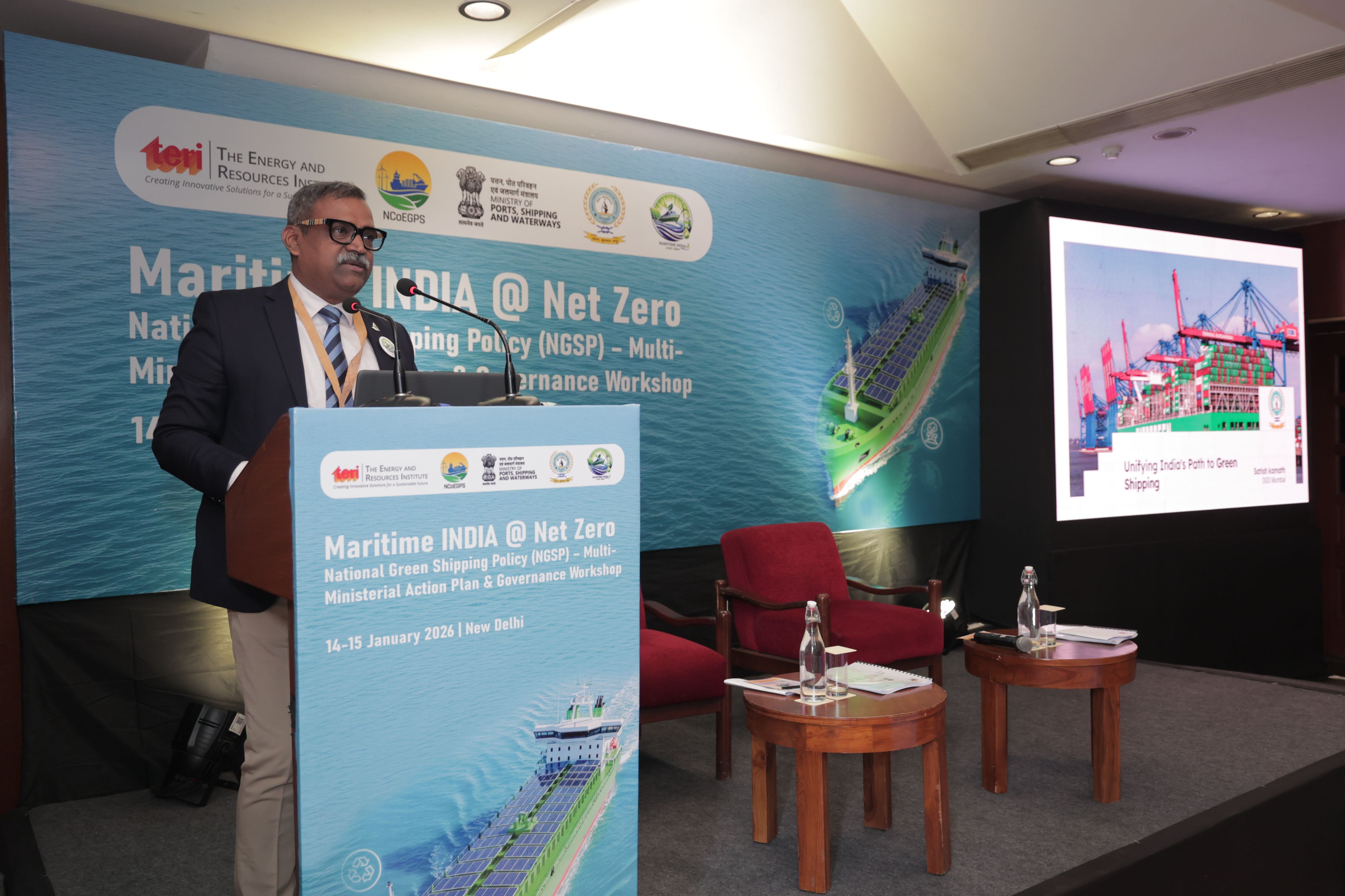
1. National Green Shipping Policy – Governance & Implementation Architecture
Policy pillars, institutional roles, inter-agency coordination and execution mechanisms.
National Green Shipping Policy
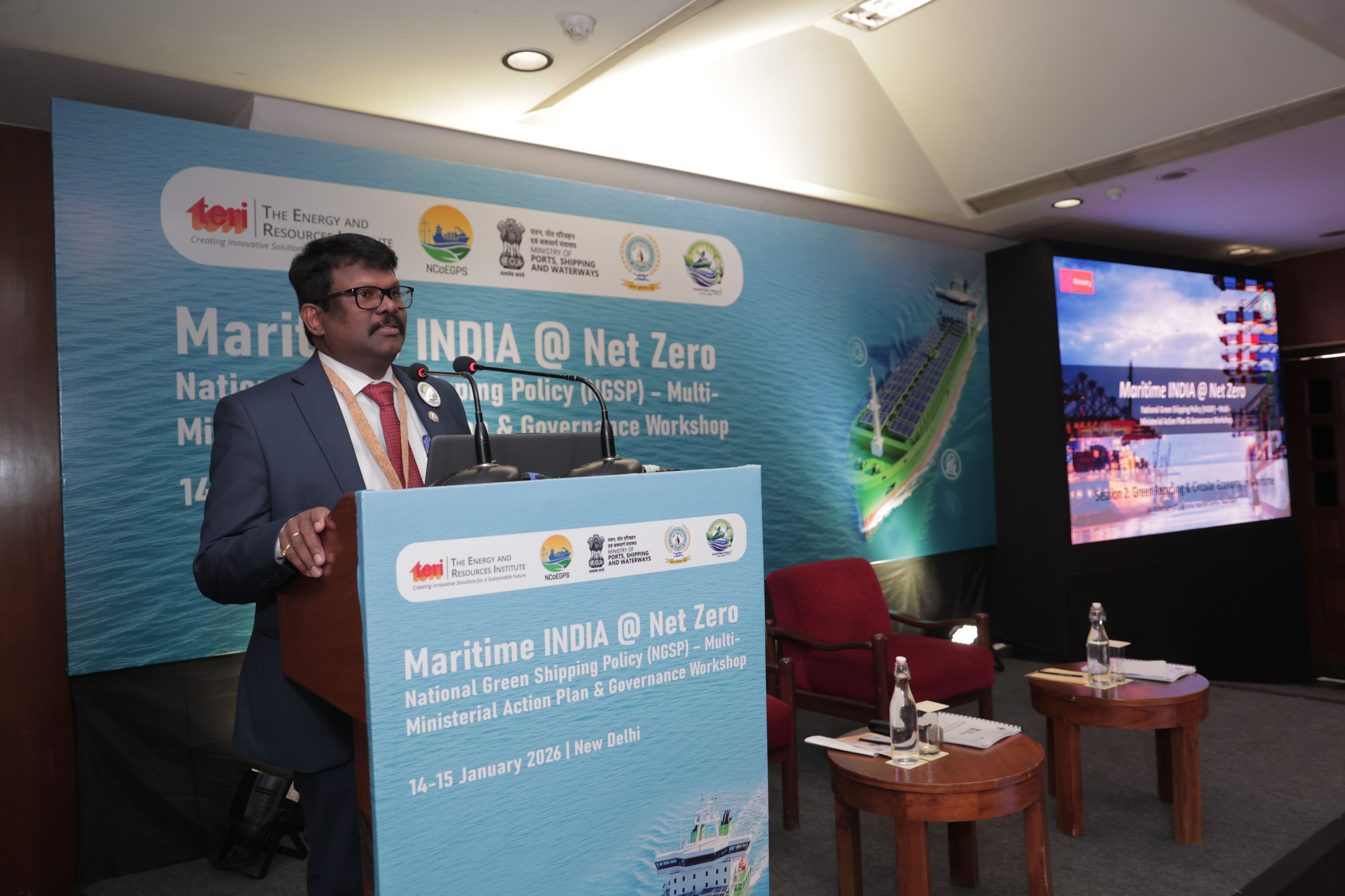
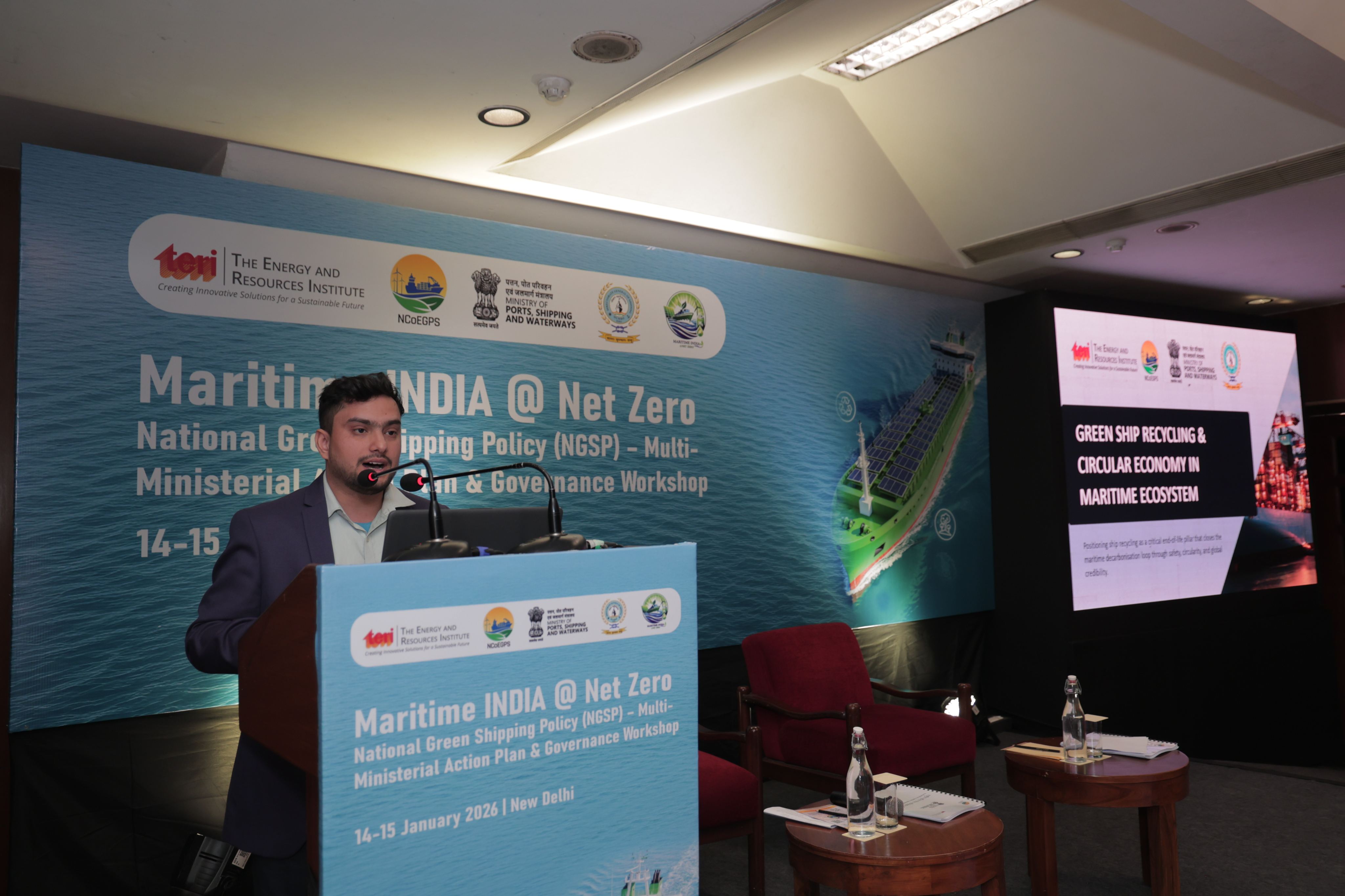
2. Green Ship Recycling & Circular Economy
HKC-aligned ship recycling, ISO compliance (9001, 14001, 30000, 45001), IHM implementation, green steel linkages and circular economy positioning.
Green Ship Recycling & Circular Economy
Green Ship Recycling & Circular Economy
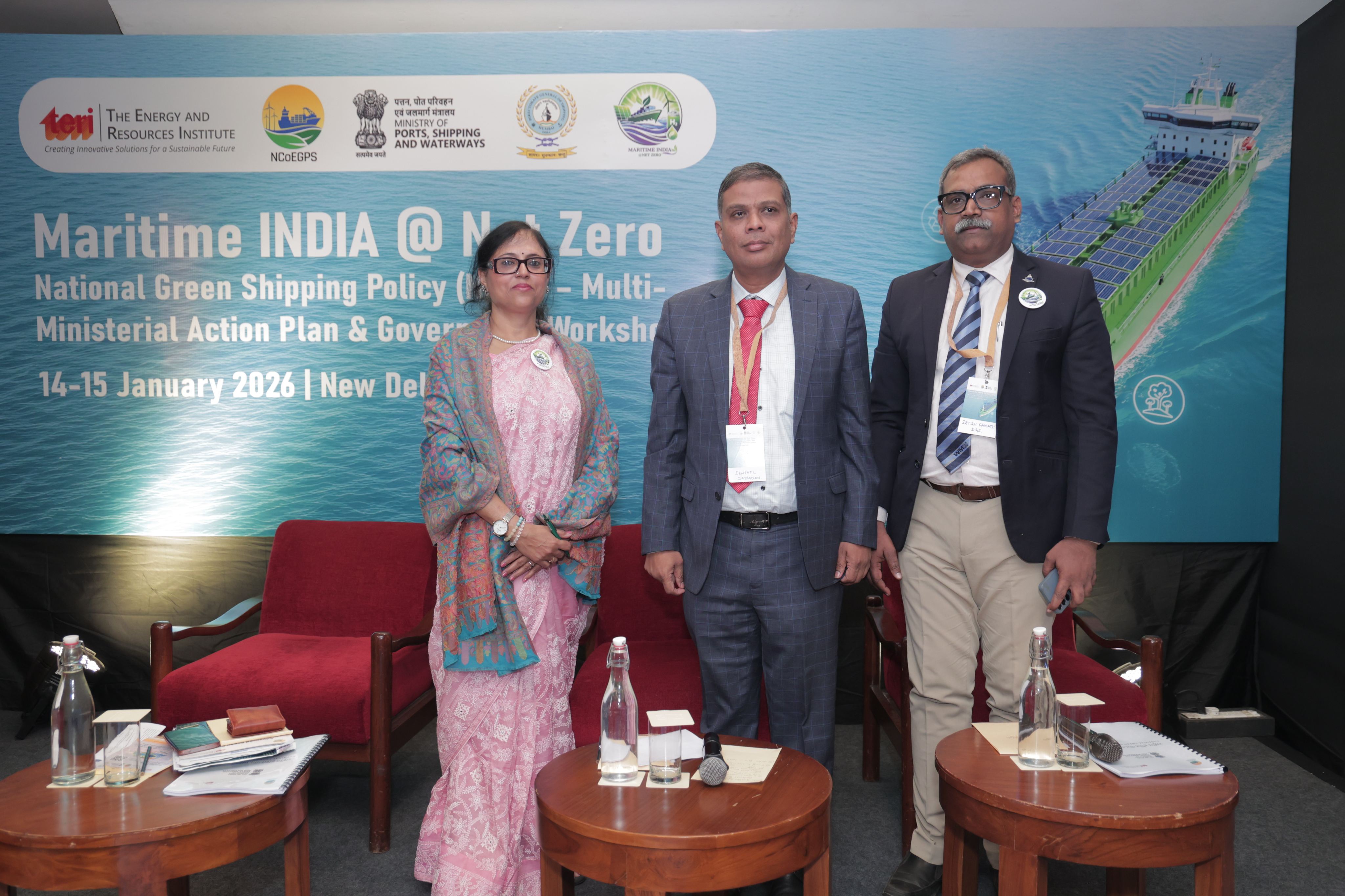
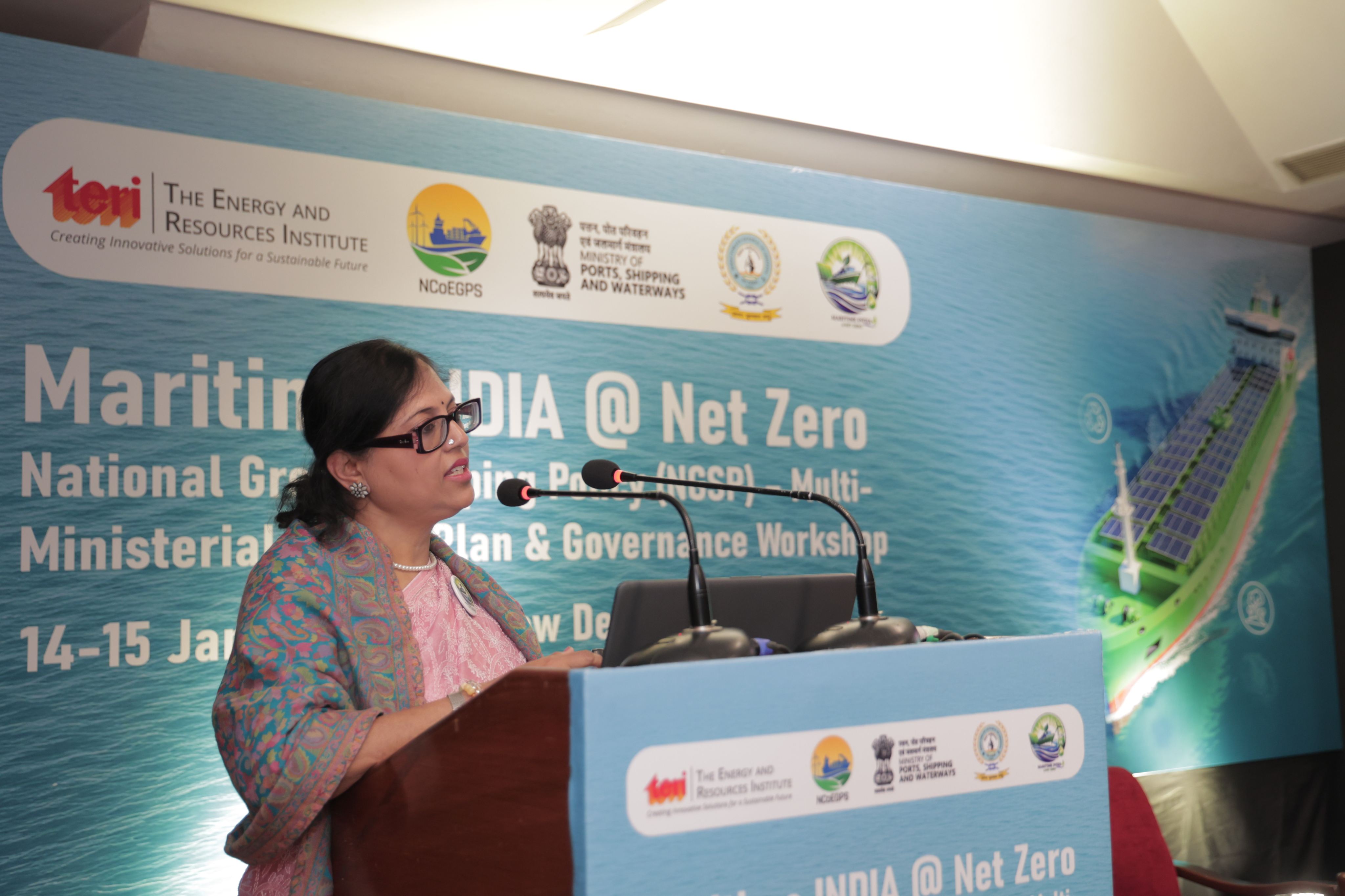
3. Green Fuels & Alternate Energy Pathways
Biofuels, green ammonia, hydrogen, methanol, infrastructure readiness, bunkering safety, pricing, lifecycle analysis and national roadmap development.
Green Fuels & Alternate Energy Pathways
Green Fuels & Alternate Energy Pathways
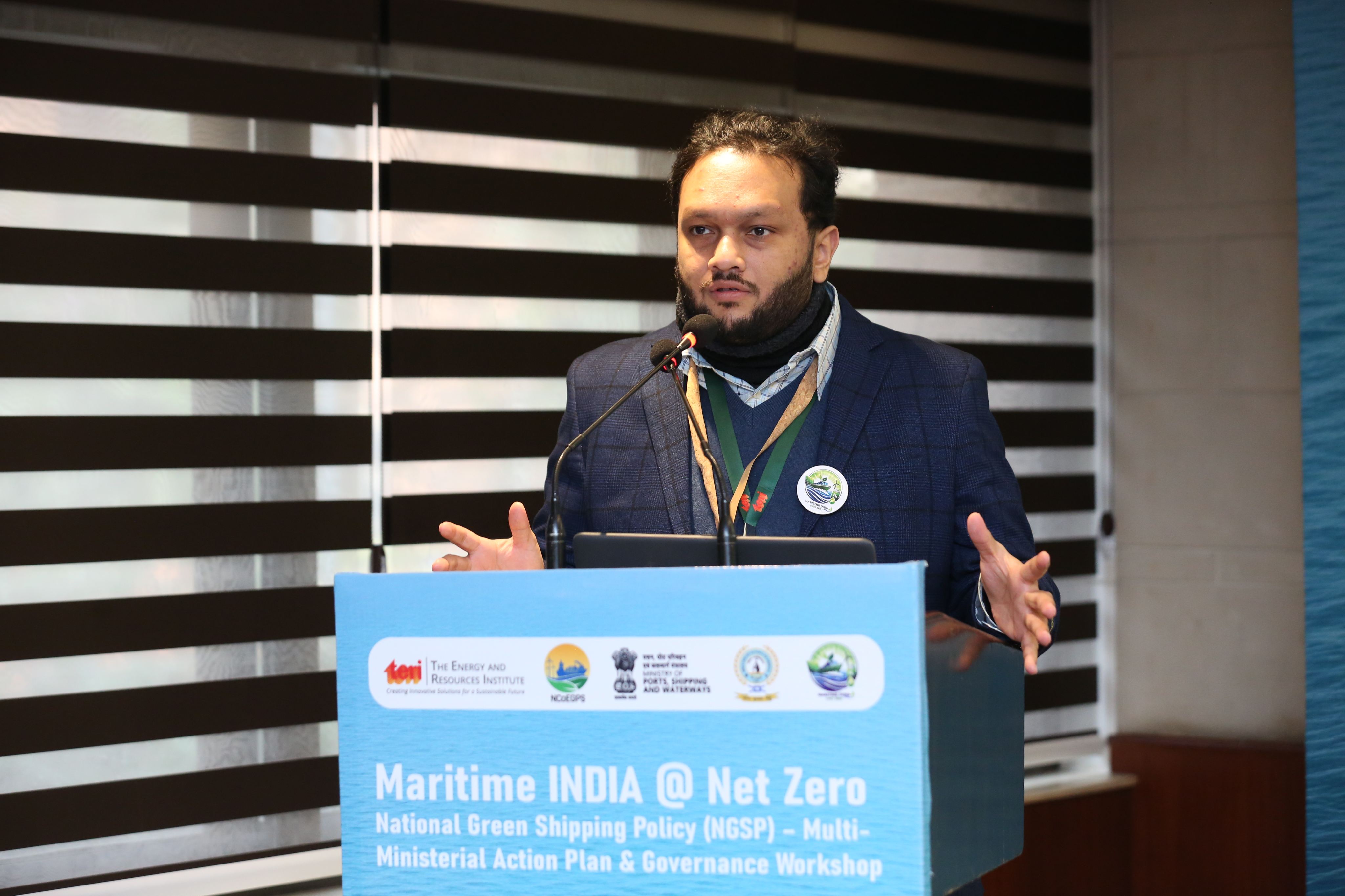
4. Green Ports & Port-led Decarbonisation
Green Port Index, shore power, electrification, renewable integration, green tug transition and MRV systems aligned with Harit Sagar Guidelines.
Green Ports & Port-led Decarbonisation
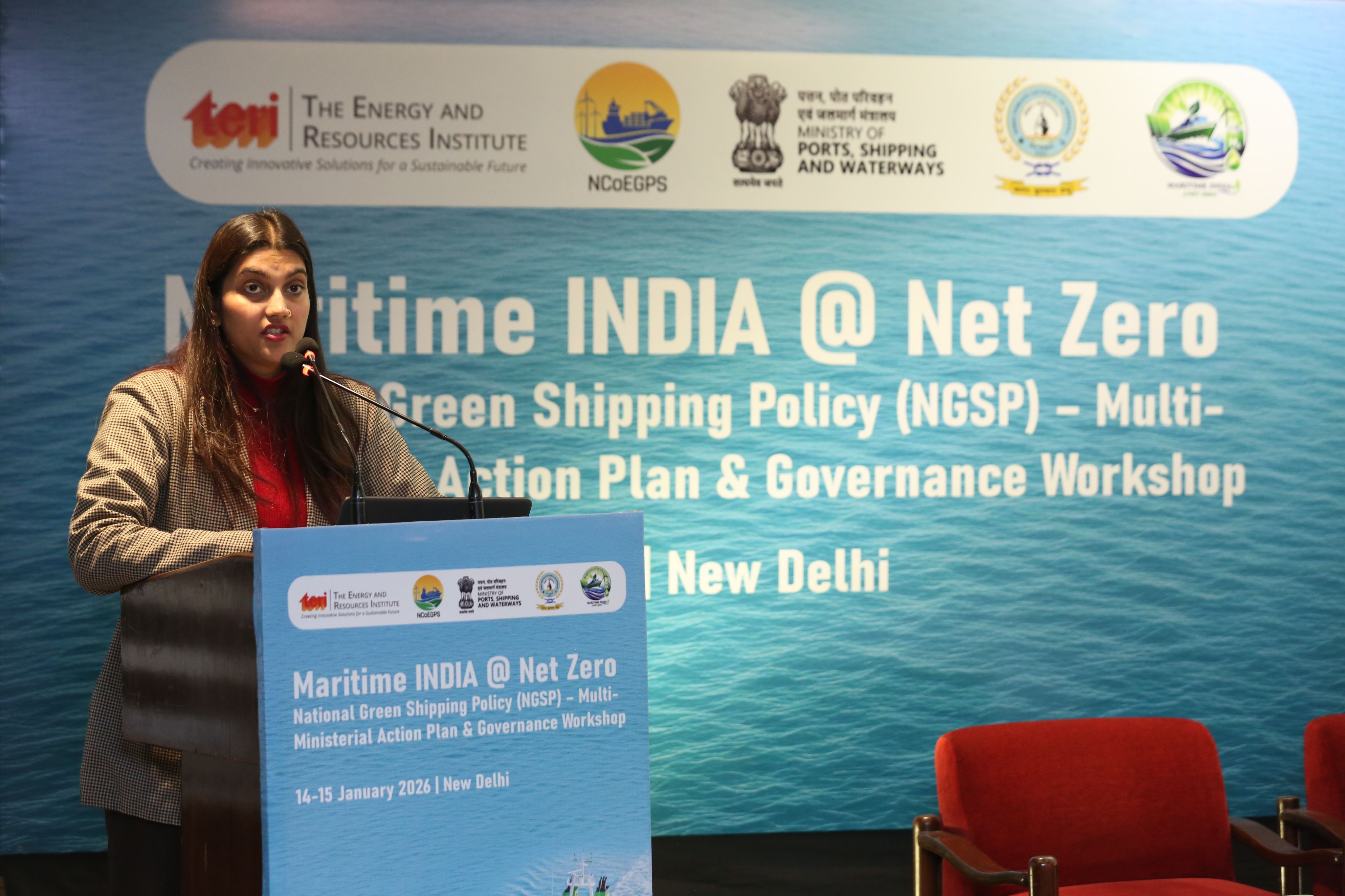
5. Green Ships & Technology Transition
EEXI and CII compliance, hybrid propulsion, retrofitting, digital optimisation, manufacturing readiness and technology transfer.
Green Ships & Technology Transition
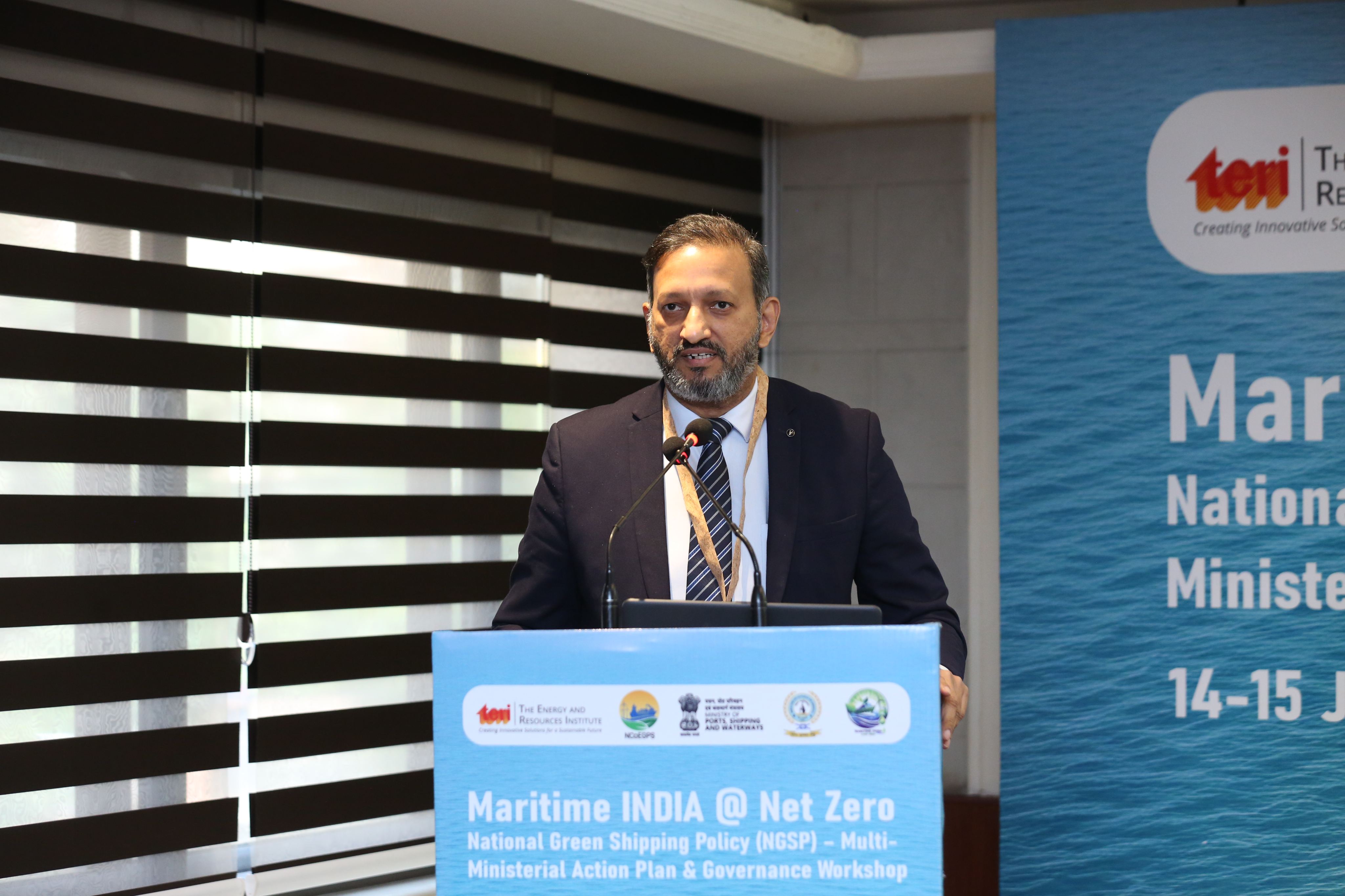
Green Ships & Technology Transition
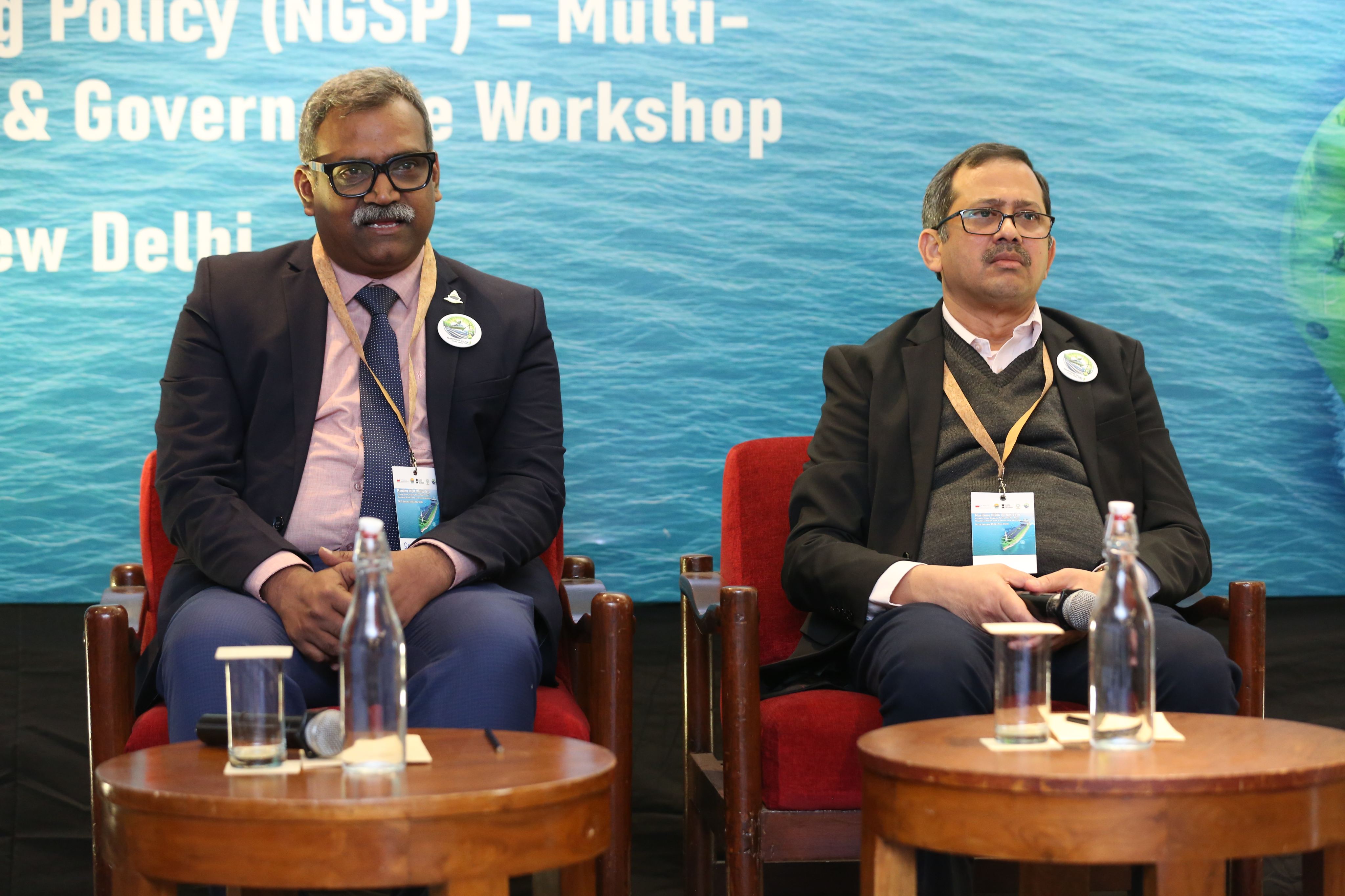
Green Ships & Technology Transition
6. Green Finance & Market Instruments
Green bonds, blended finance, risk-sharing instruments, PPP models, development finance participation and investment enablement frameworks.
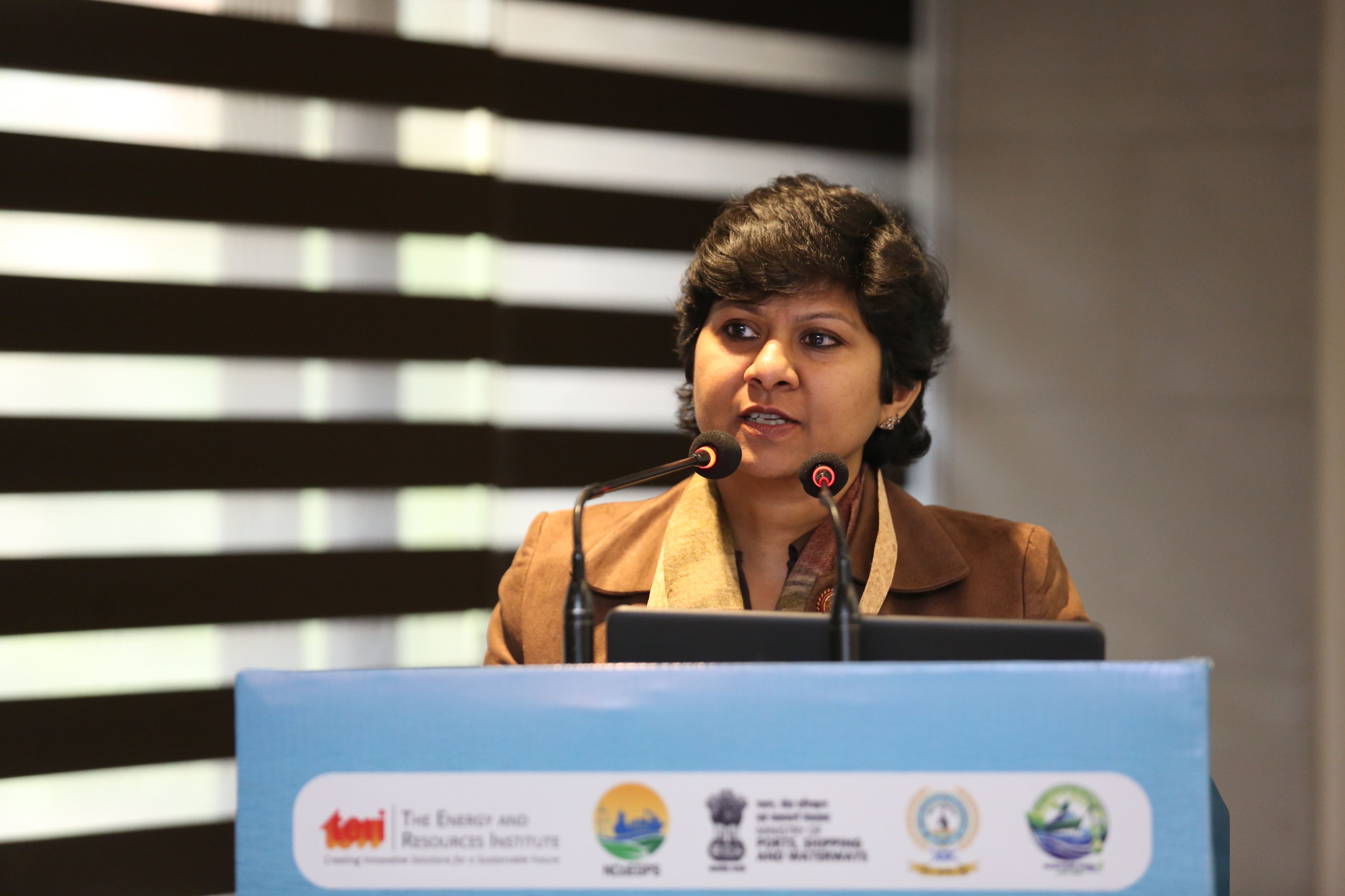
Green Finance & Market Instruments
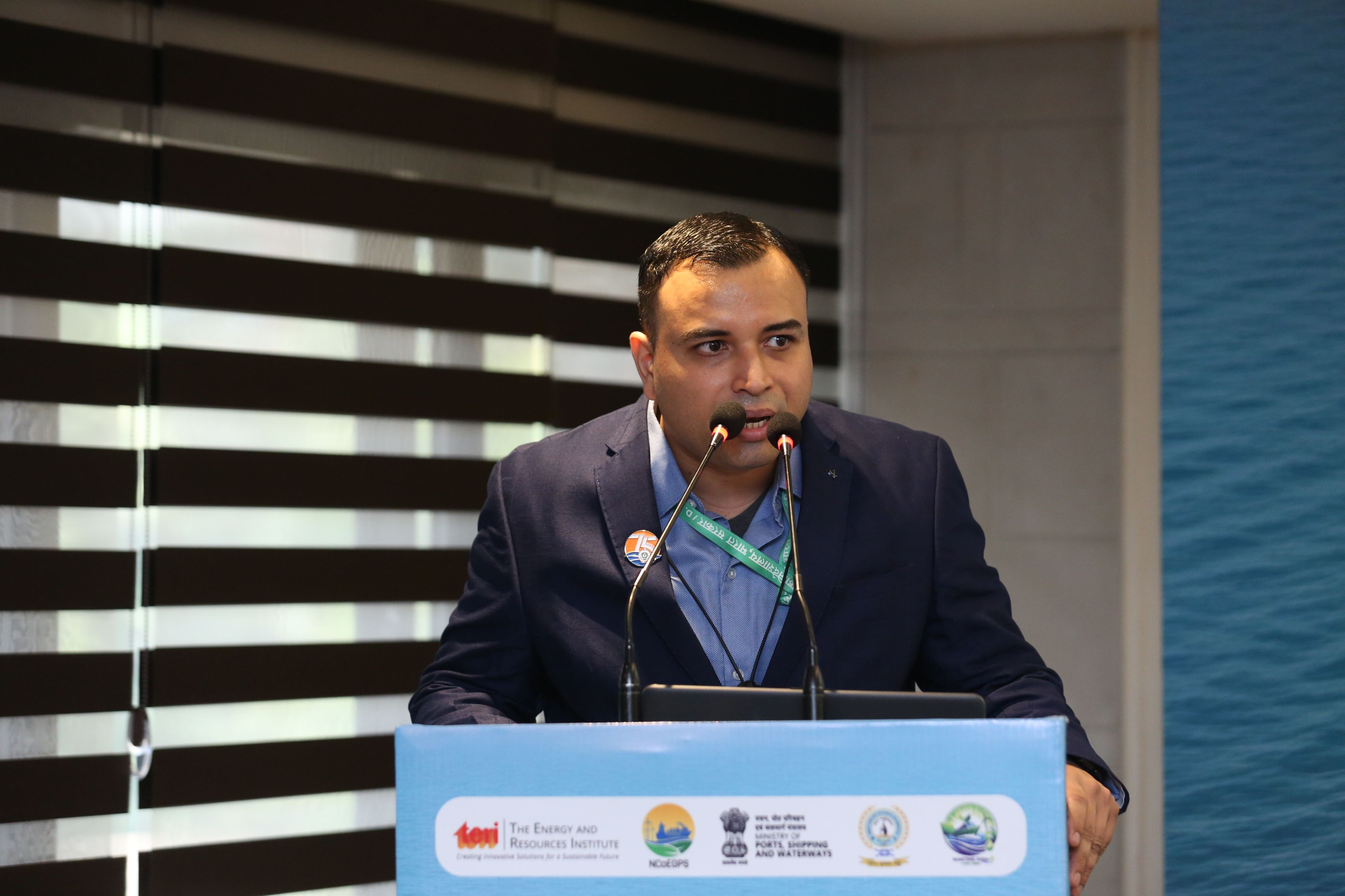
Green Finance & Market Instruments
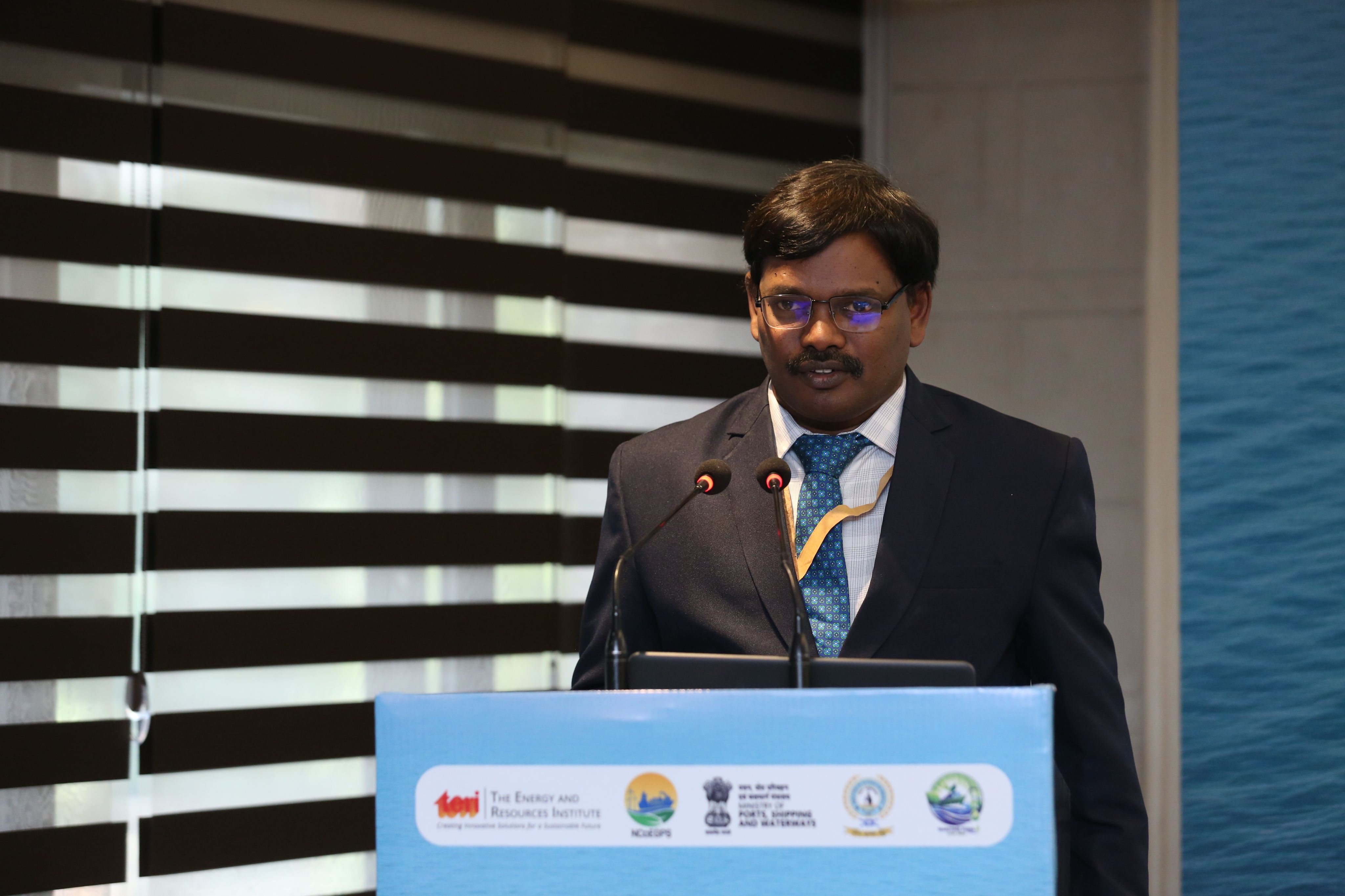
Green Finance & Market Instruments
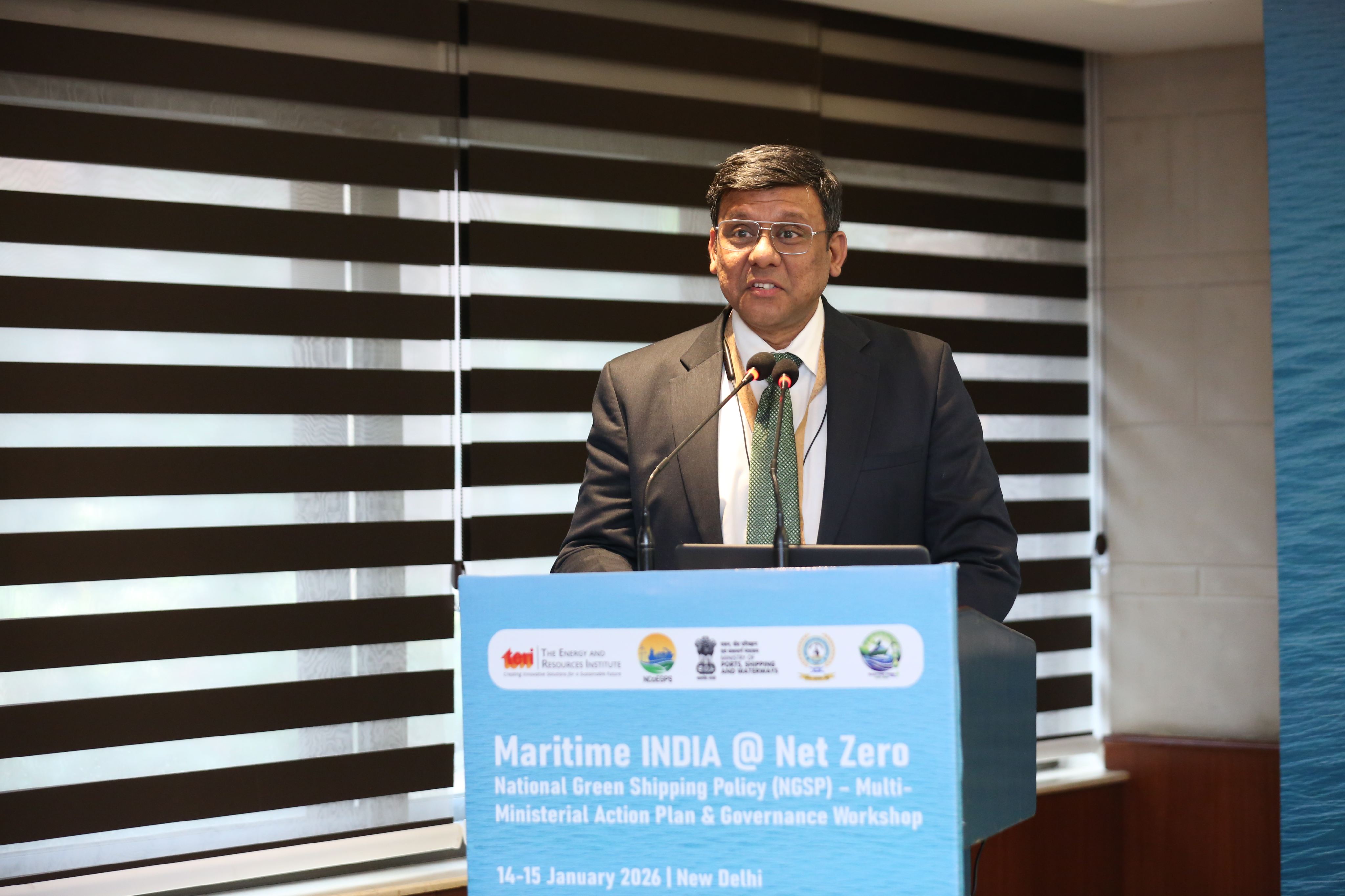
Green Finance & Market Instruments
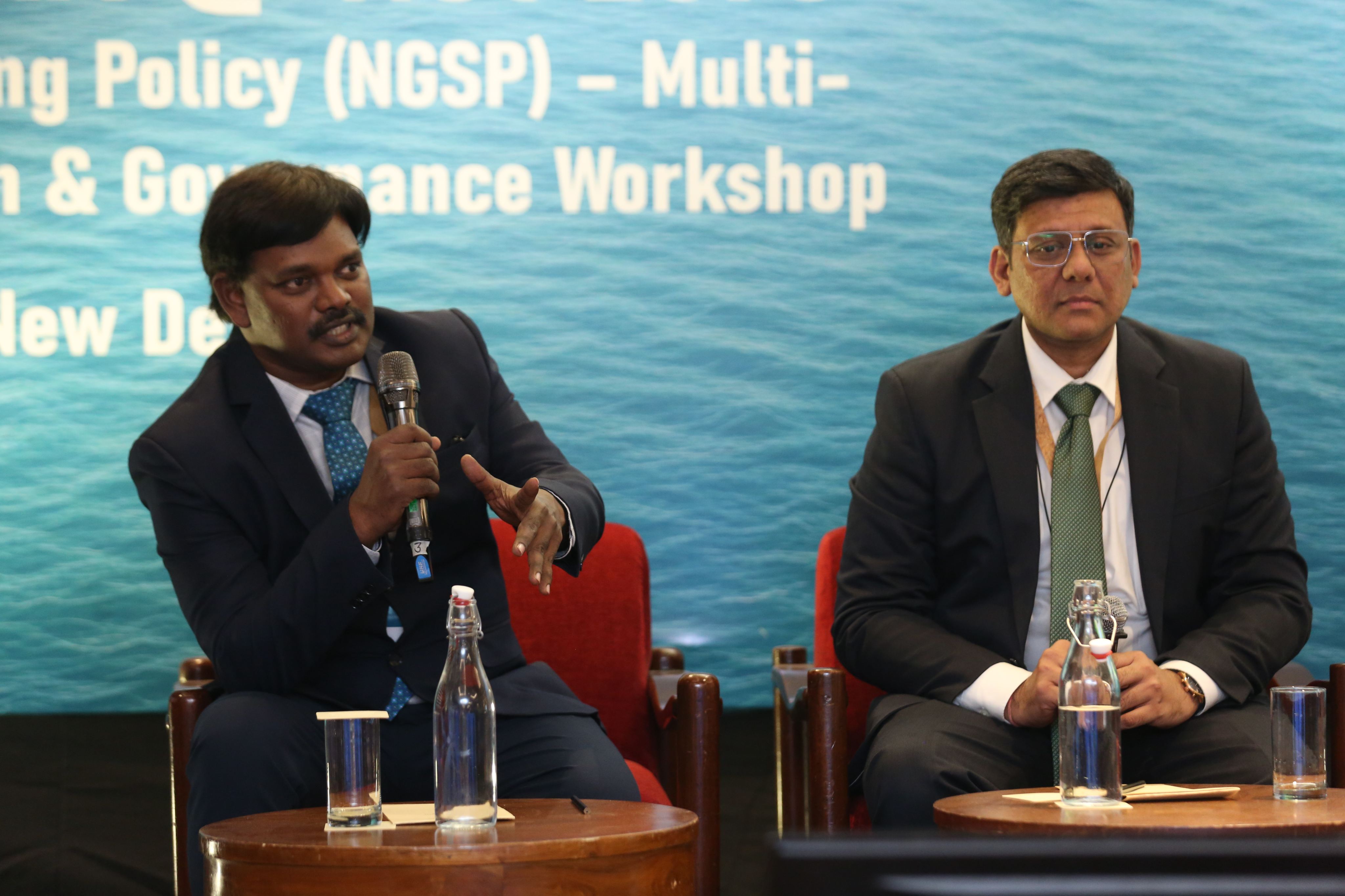
Green Finance & Market Instruments
7. Green Skill and Capacity Building
This session focused on strengthening institutional capacity and skilling pathways required for effective implementation of the National Green Shipping Policy. Deliberations covered training frameworks across ships, ports, fuels, safety systems, regulatory compliance and emerging green technologies.
The session emphasised workforce readiness, structured certification pathways, institutional strengthening of maritime training ecosystems and coordinated capacity development to support phased execution of NGSP pillars.
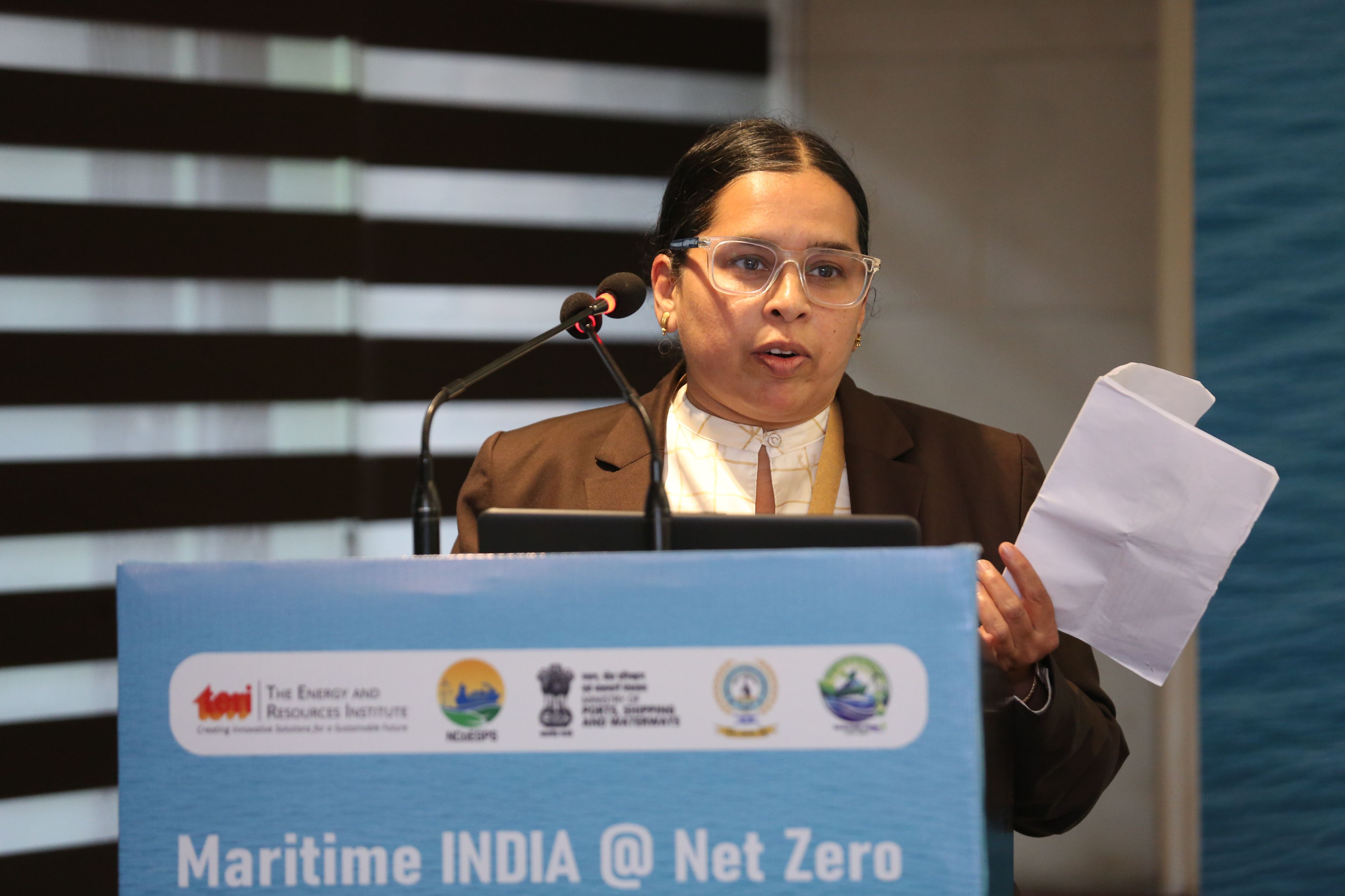
Green Skill and Capacity Building
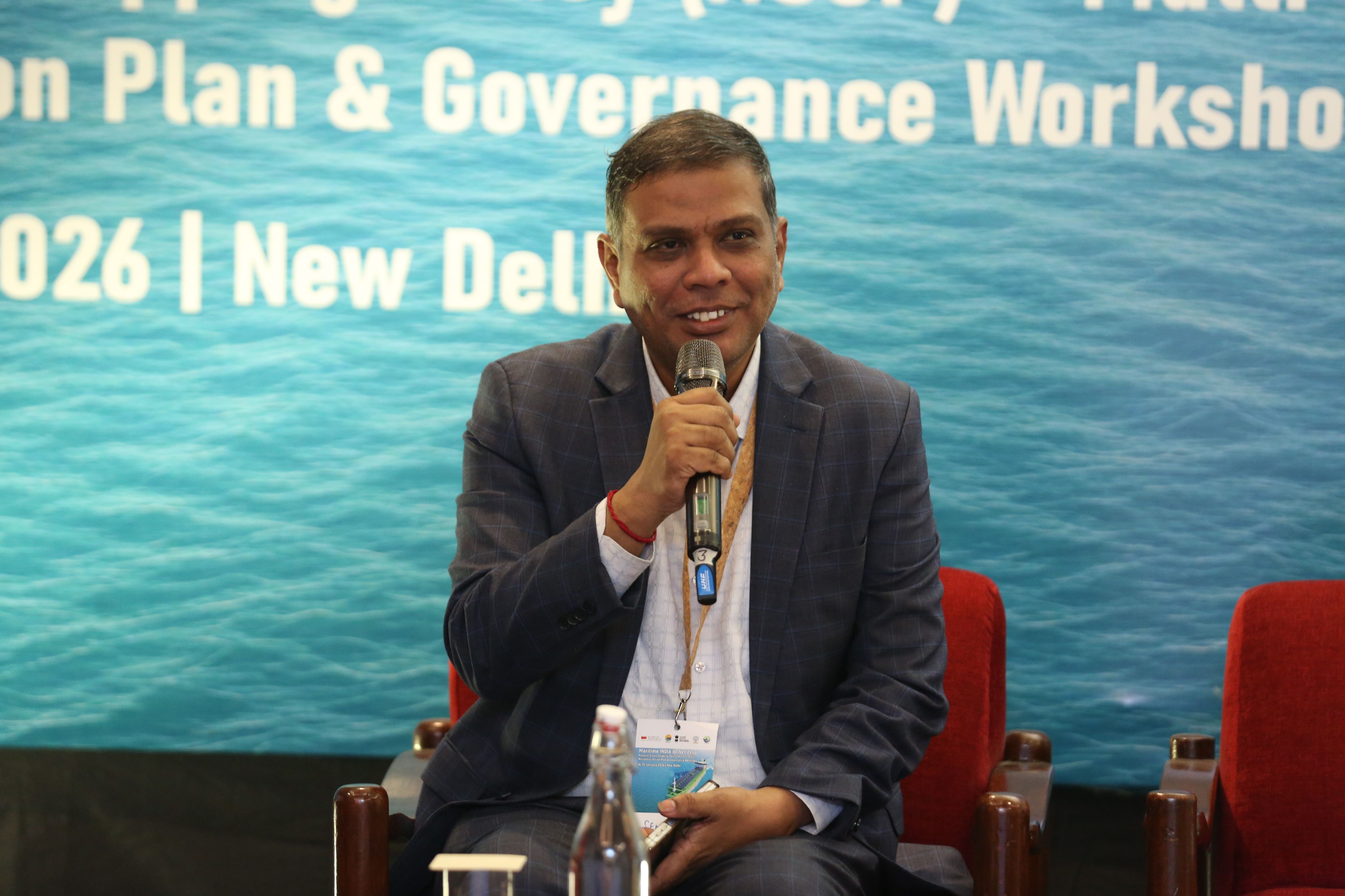
Green Skill and Capacity Building
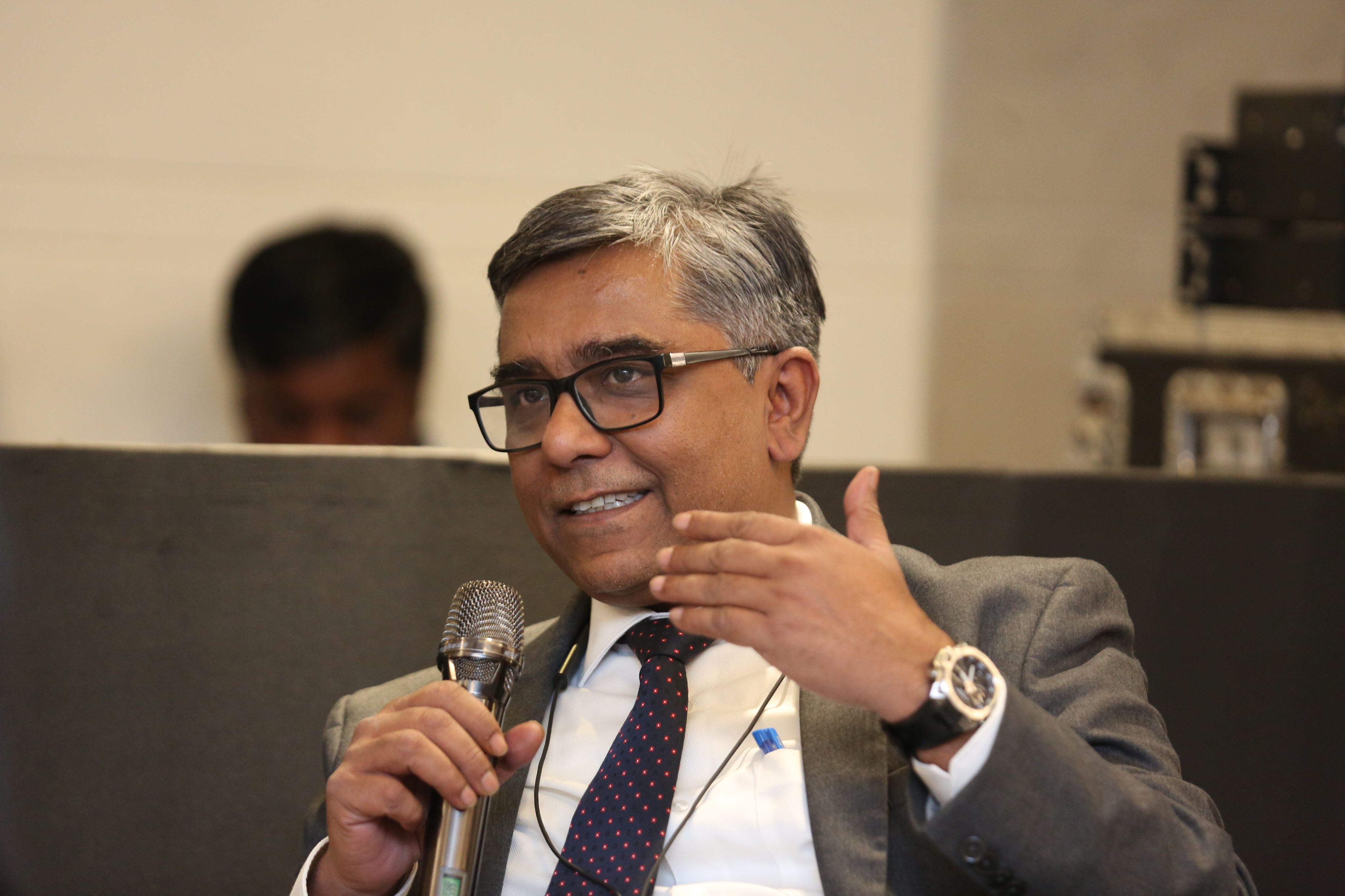
Green Skill and Capacity Building
8. International Collaboration
IMO decarbonisation trajectory, GreenVoyage2050, green shipping corridors and multilateral cooperation frameworks.
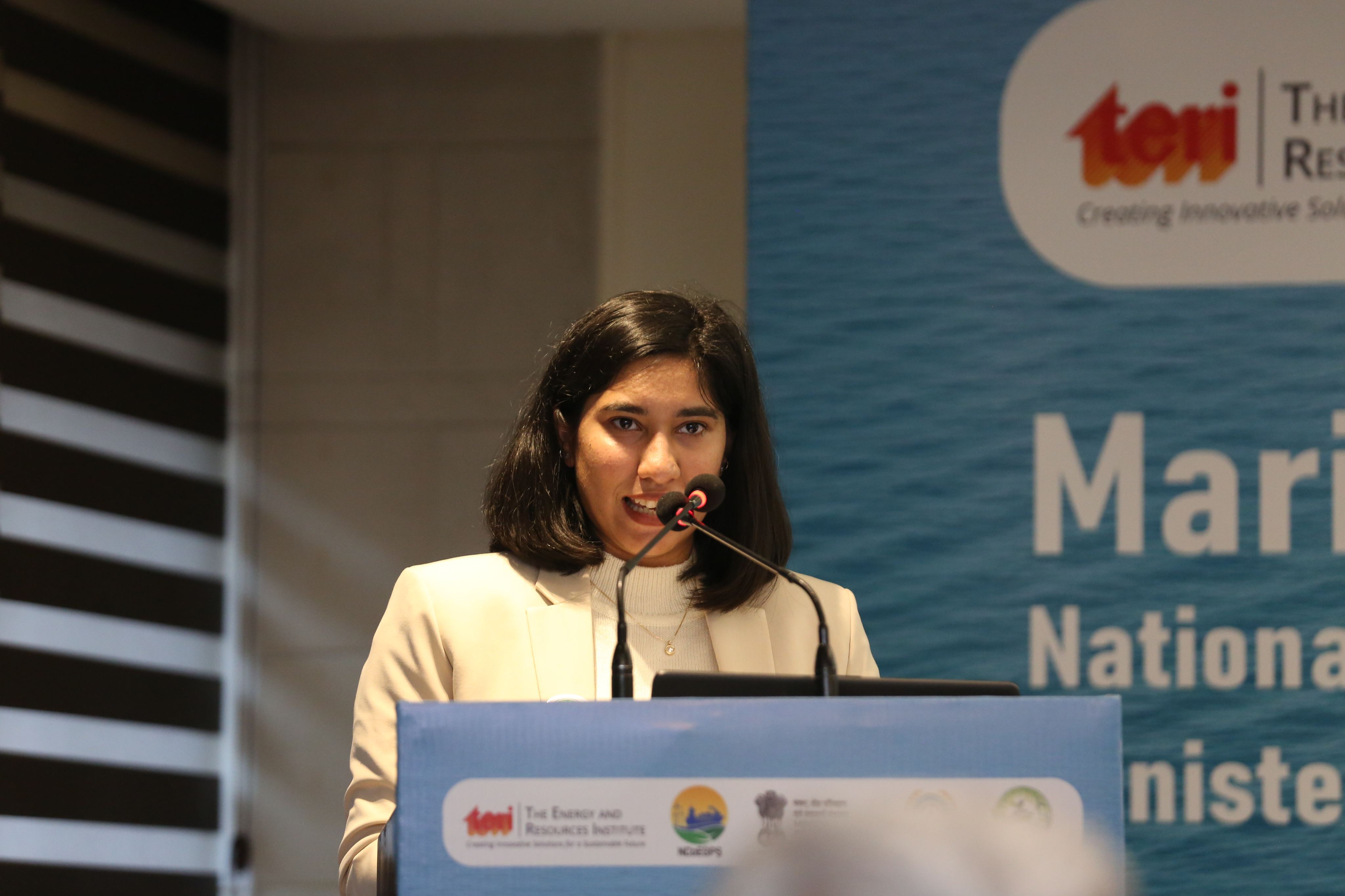
International Collaboration
Key Outcomes
- Multi-stakeholder recommendations captured across all NGSP pillars
- 57 online comments, 8 in-person comments and 49 session-wise questions recorded
- Strong emphasis on statutory governance mechanisms and escalation powers
- Stakeholder inputs on real-time MRV systems linked to regulatory and funding triggers
- Identification of implementation barriers including fuel availability, CAPEX, financing access and skills gaps
The engagement demonstrated strong national ownership and implementation readiness for maritime decarbonisation.
Way Forward
- Consolidation of session-wise recommendations into an NGSP Action-Point Matrix
- Thematic validation webinars
- Inter-ministerial consultation to finalise roles and responsibilities
- Presentation to NITI Aayog for national action plan alignment
- Formalisation of governance and execution mechanisms
- Initiation of priority pilots across green fuels, ports, ships, finance and capacity building
Institutional Framework
The Ministry of Ports, Shipping and Waterways has designated TERI as the National Centre of Excellence for Green Ports and Shipping (NCoEGPS) to support structured consultations, technical inputs and implementation facilitation for NGSP.
The Directorate General of Shipping continues to lead policy execution, regulatory alignment and stakeholder coordination.
Towards Maritime Net Zero
Maritime INDIA @ Net Zero represents a decisive step toward translating policy vision into actionable national execution.
Through integrated governance, structured stakeholder engagement and phased implementation, India is positioning itself to achieve sustainable, competitive and globally aligned maritime decarbonisation.